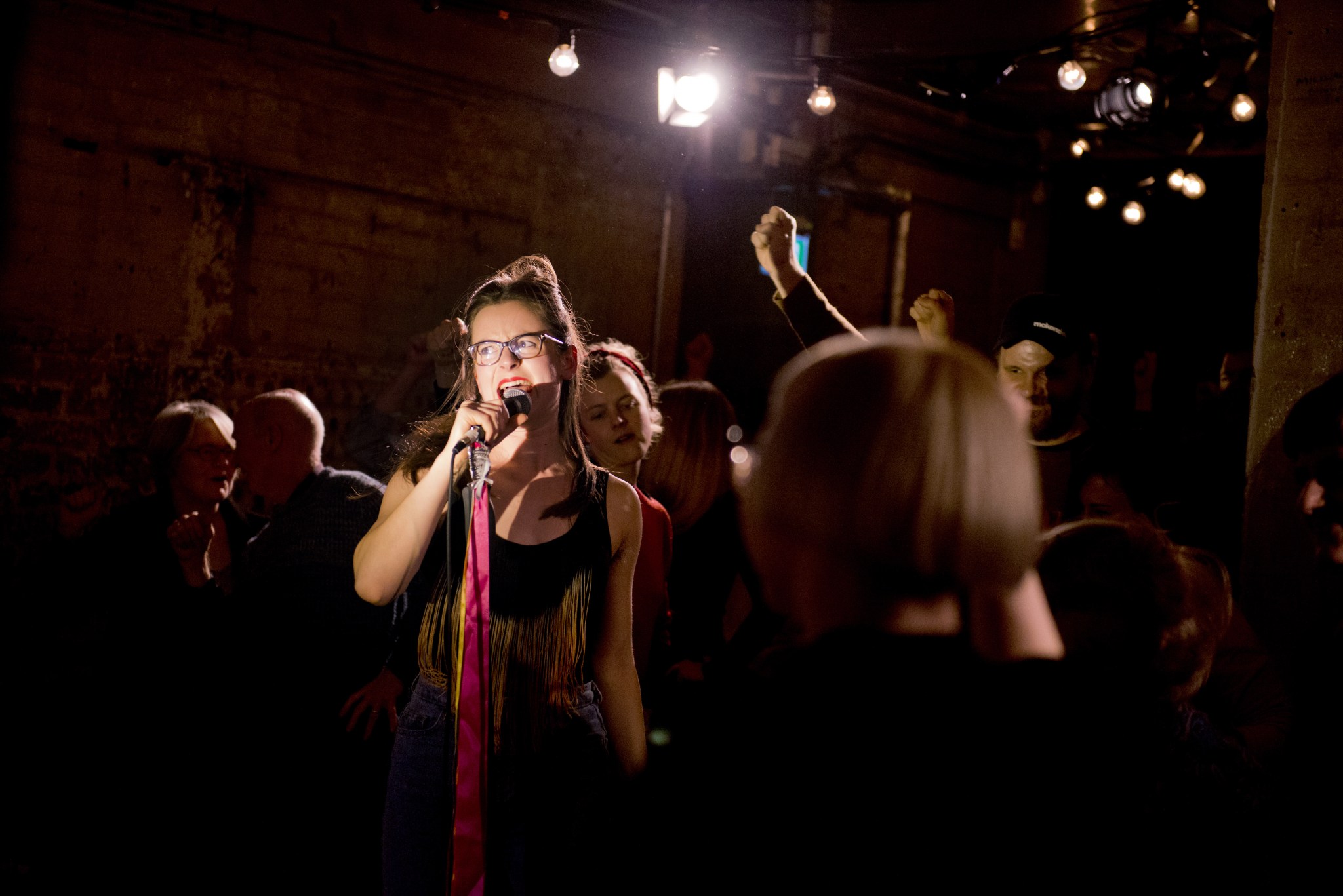
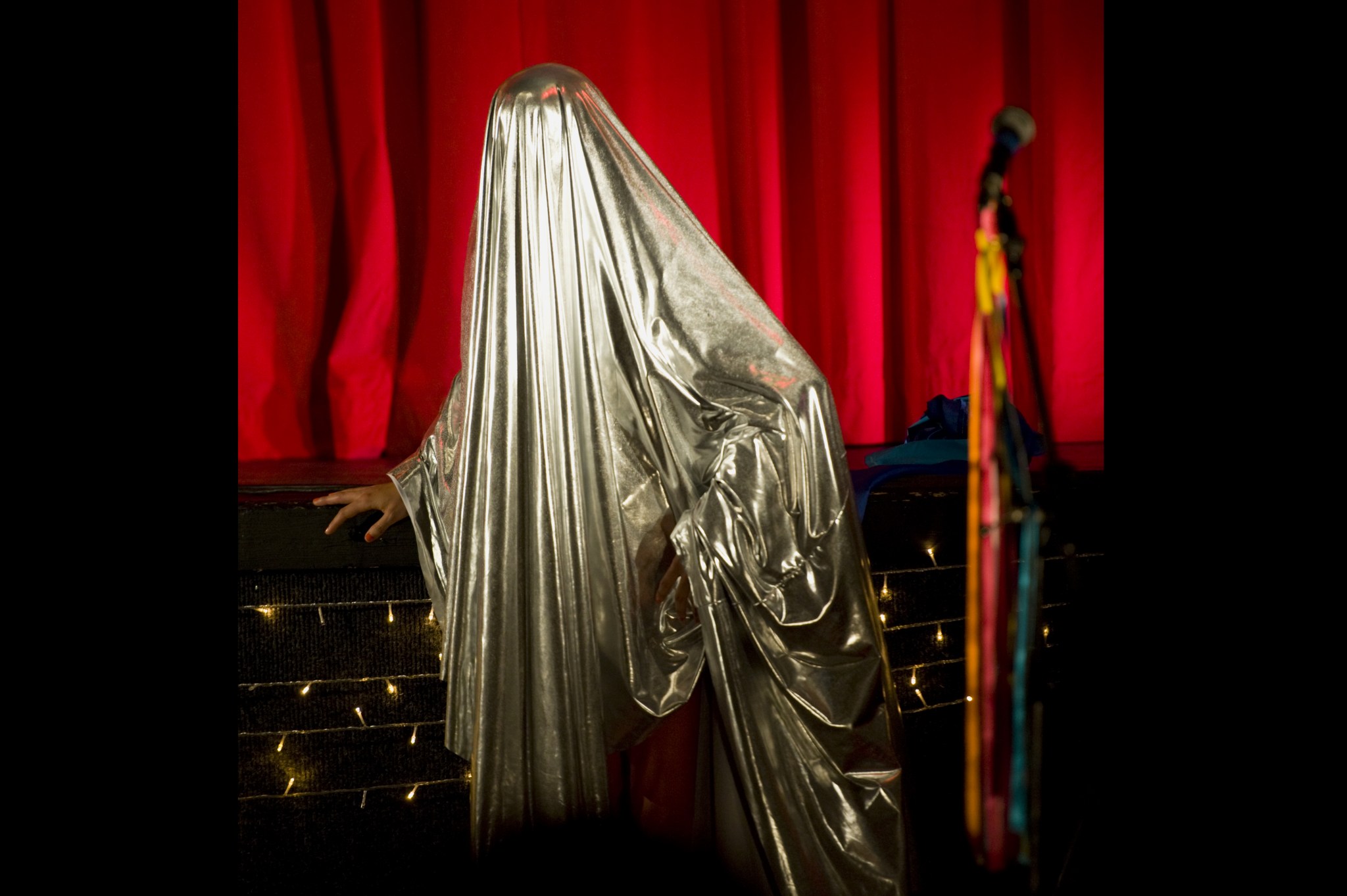
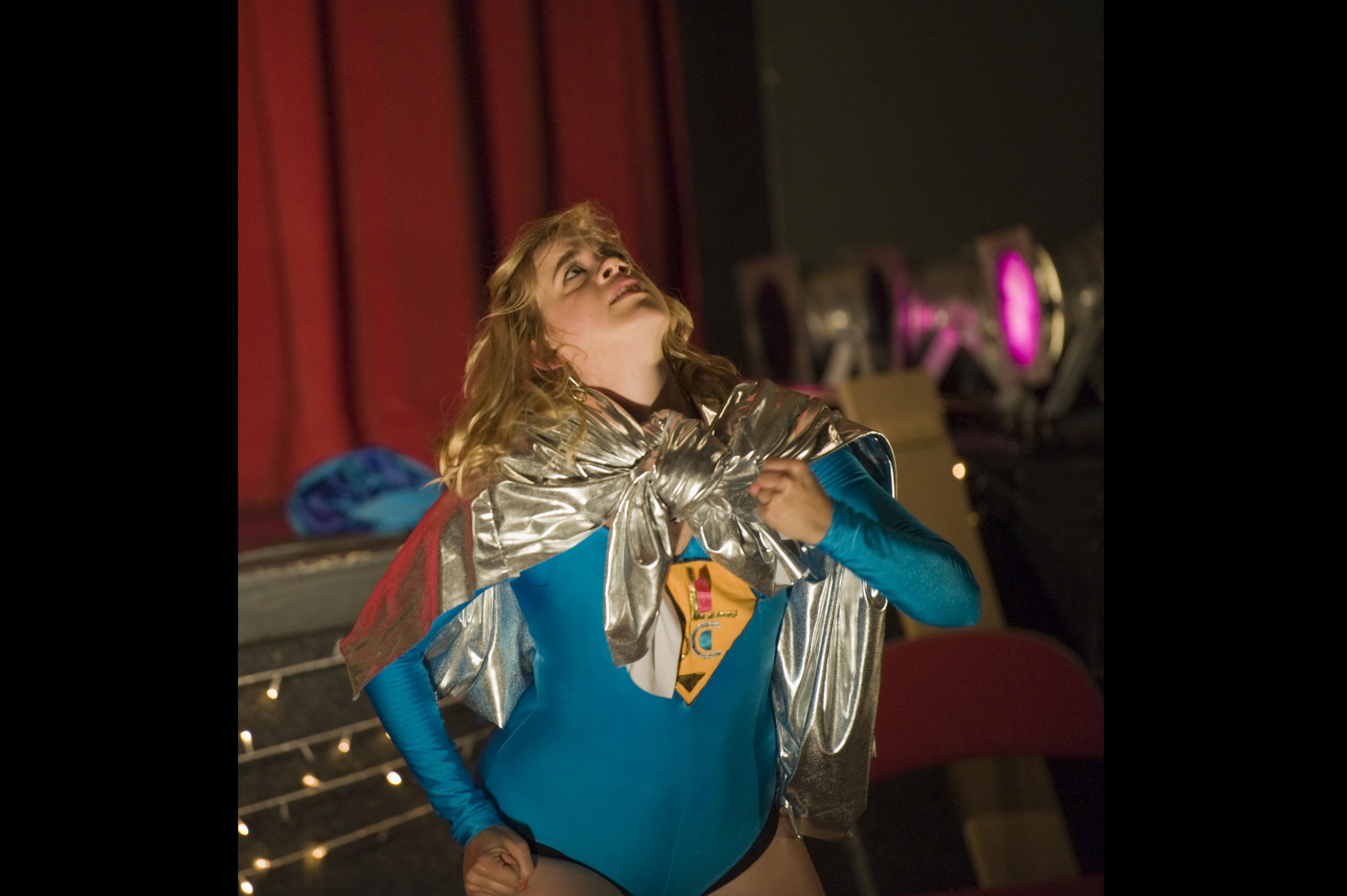
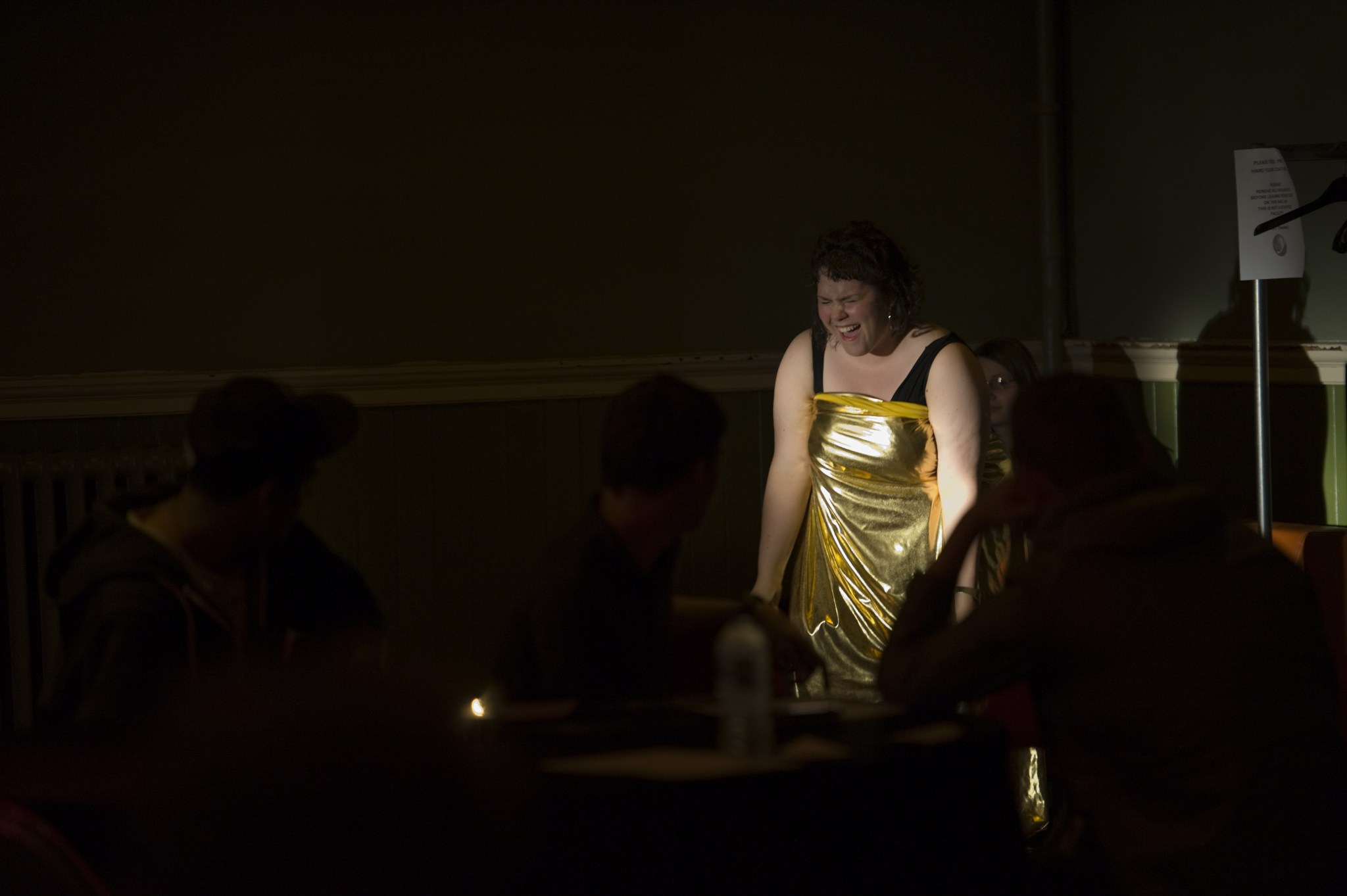
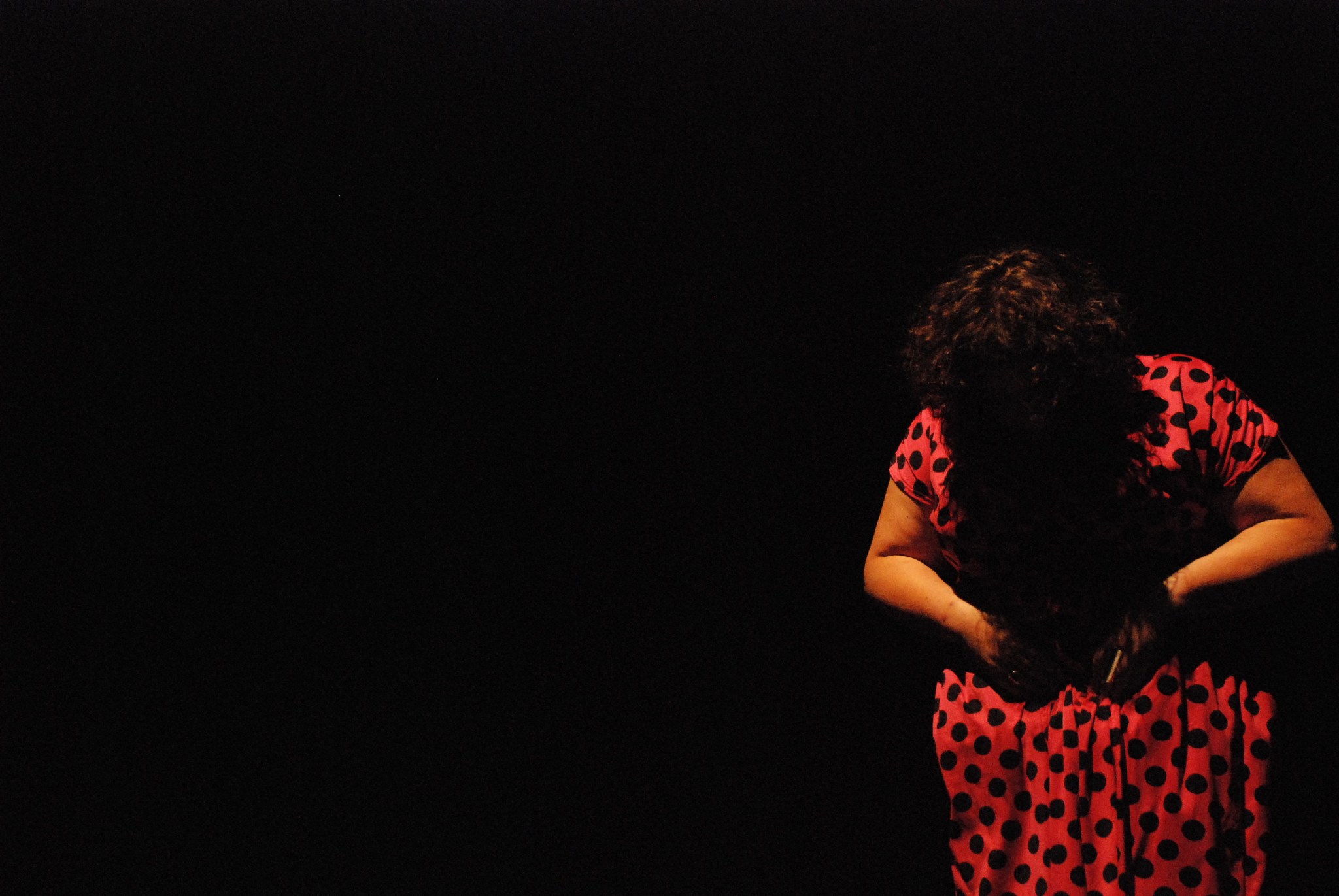
‘Our Kisses Are Petals’ by Seven Bridges

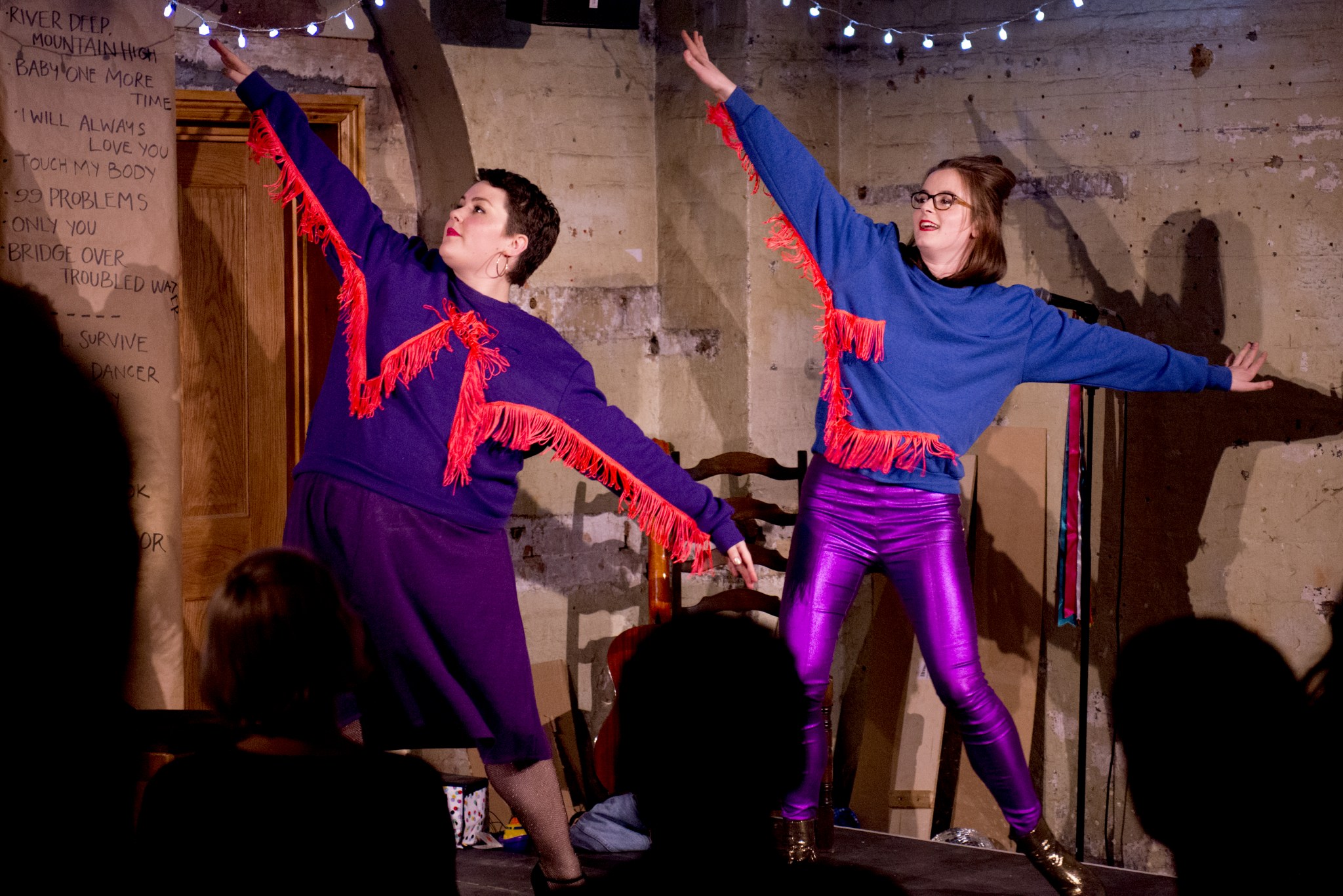
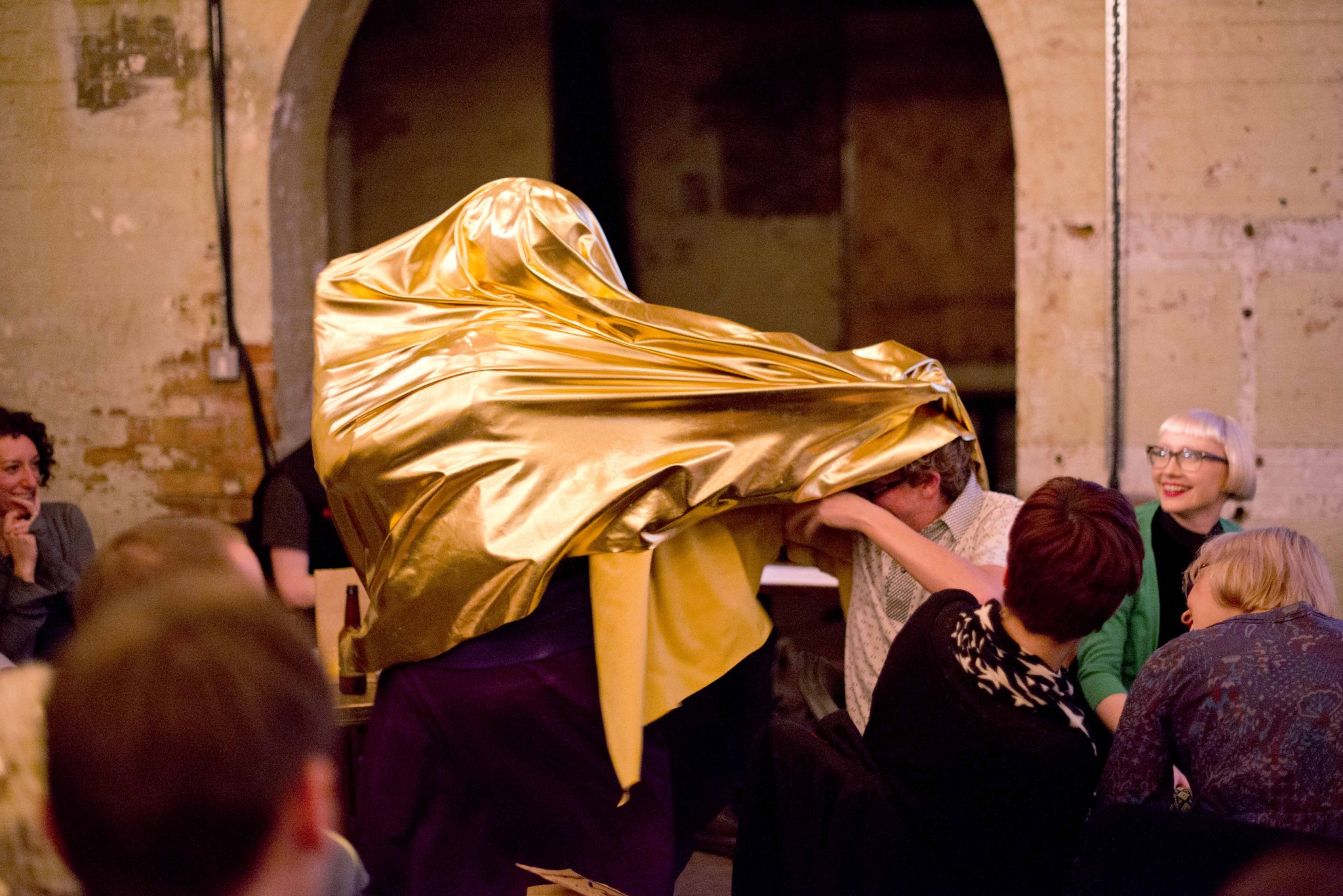
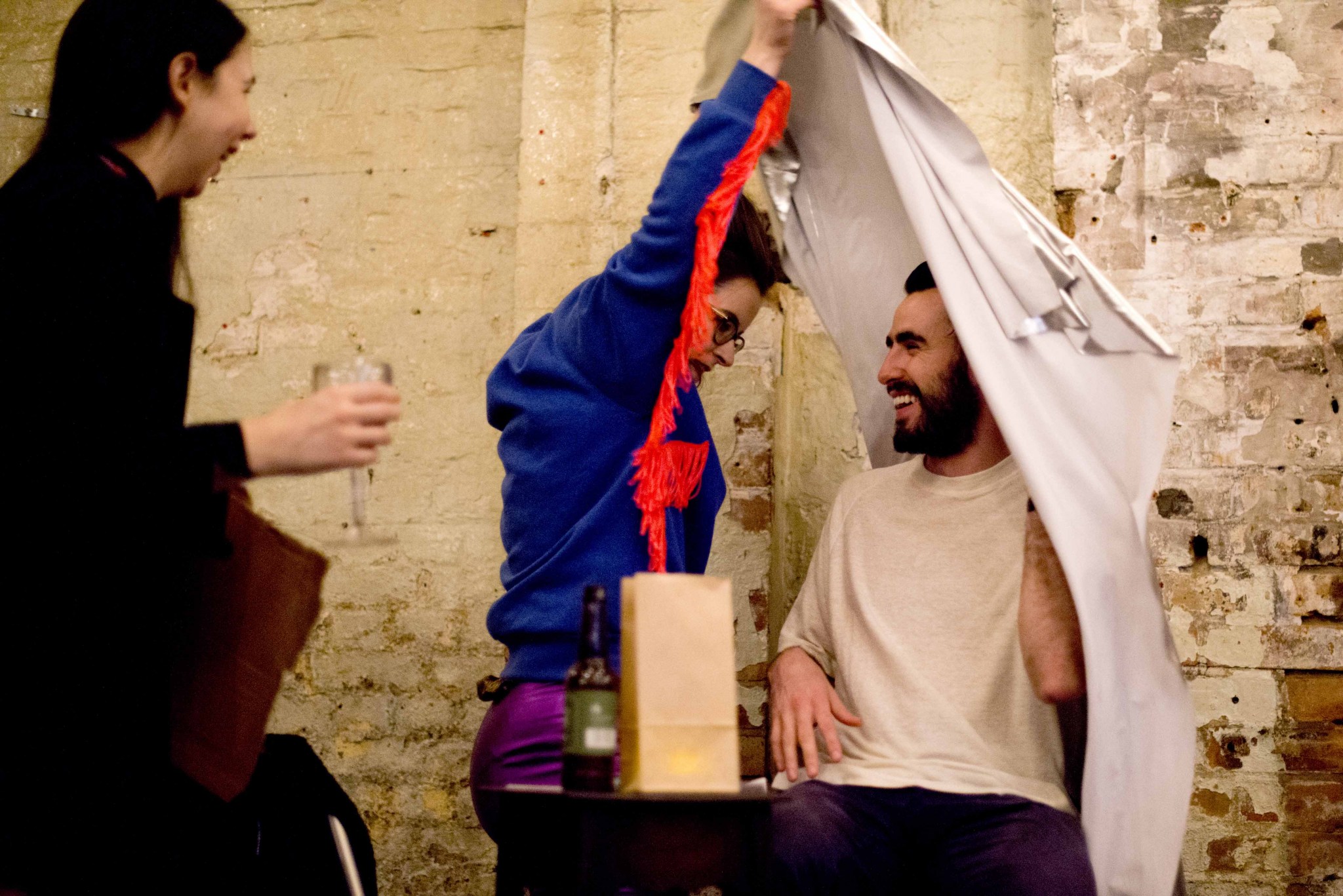
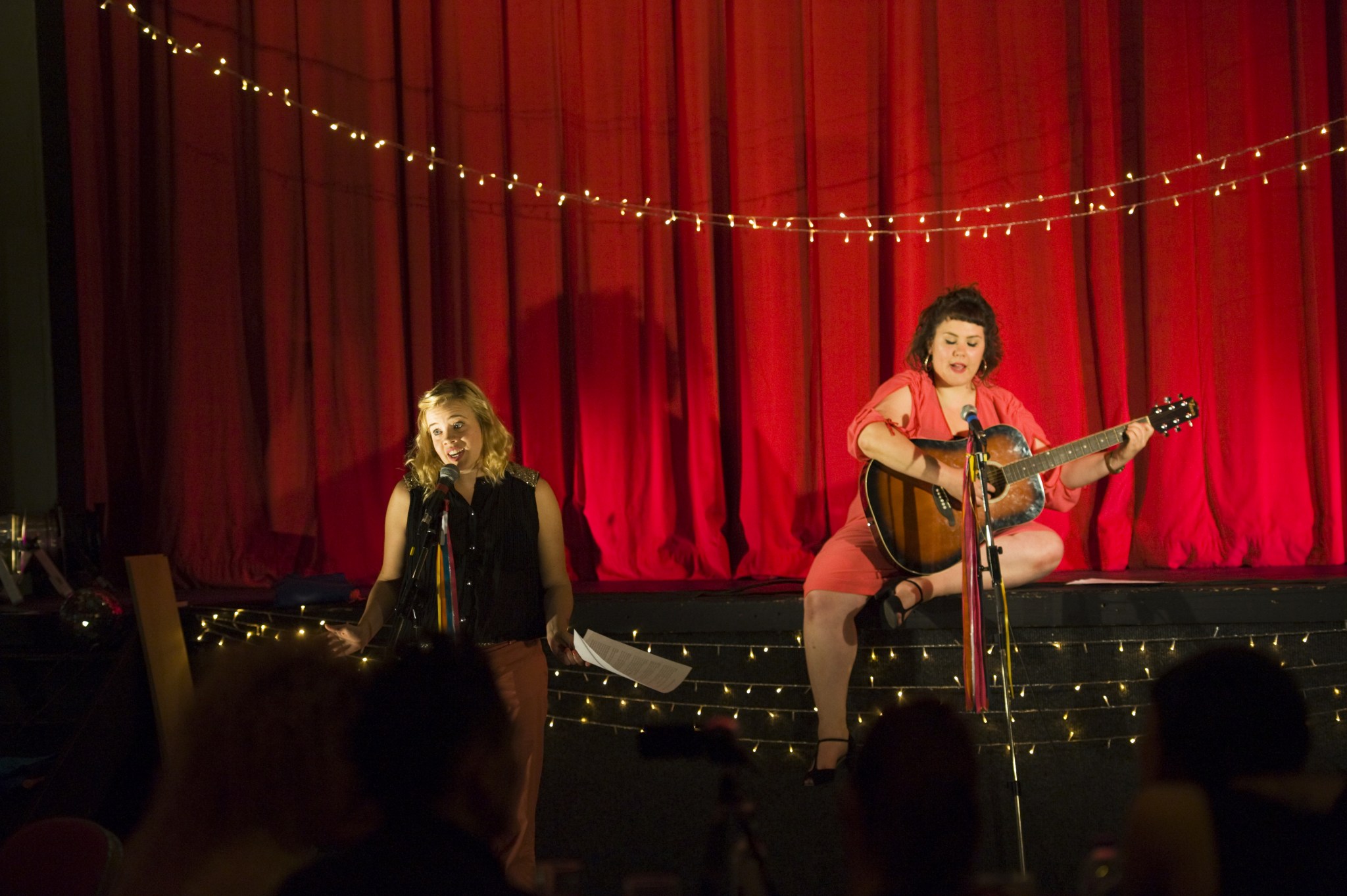
'Our Kisses Are Petals' performance by Seven Bridges

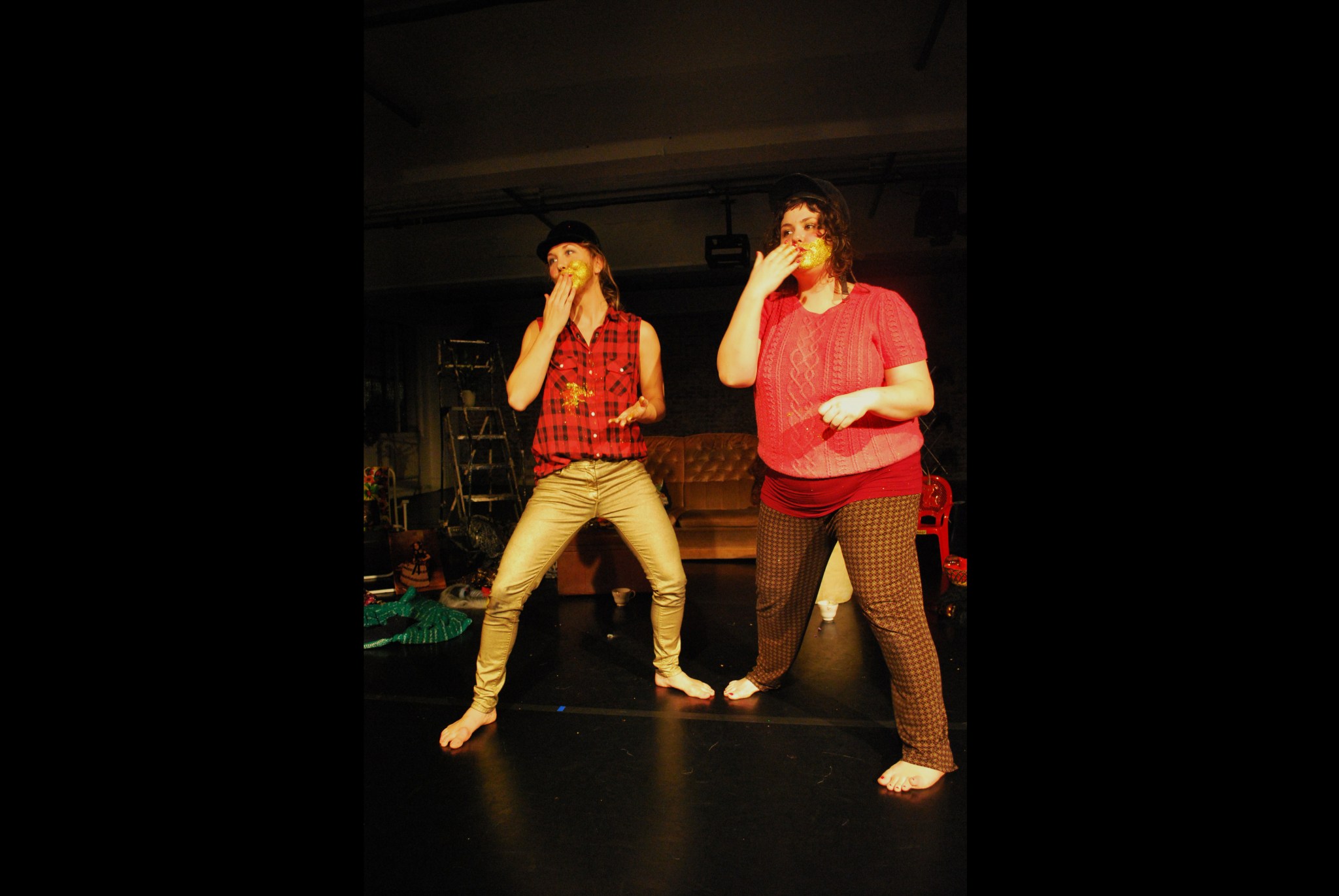
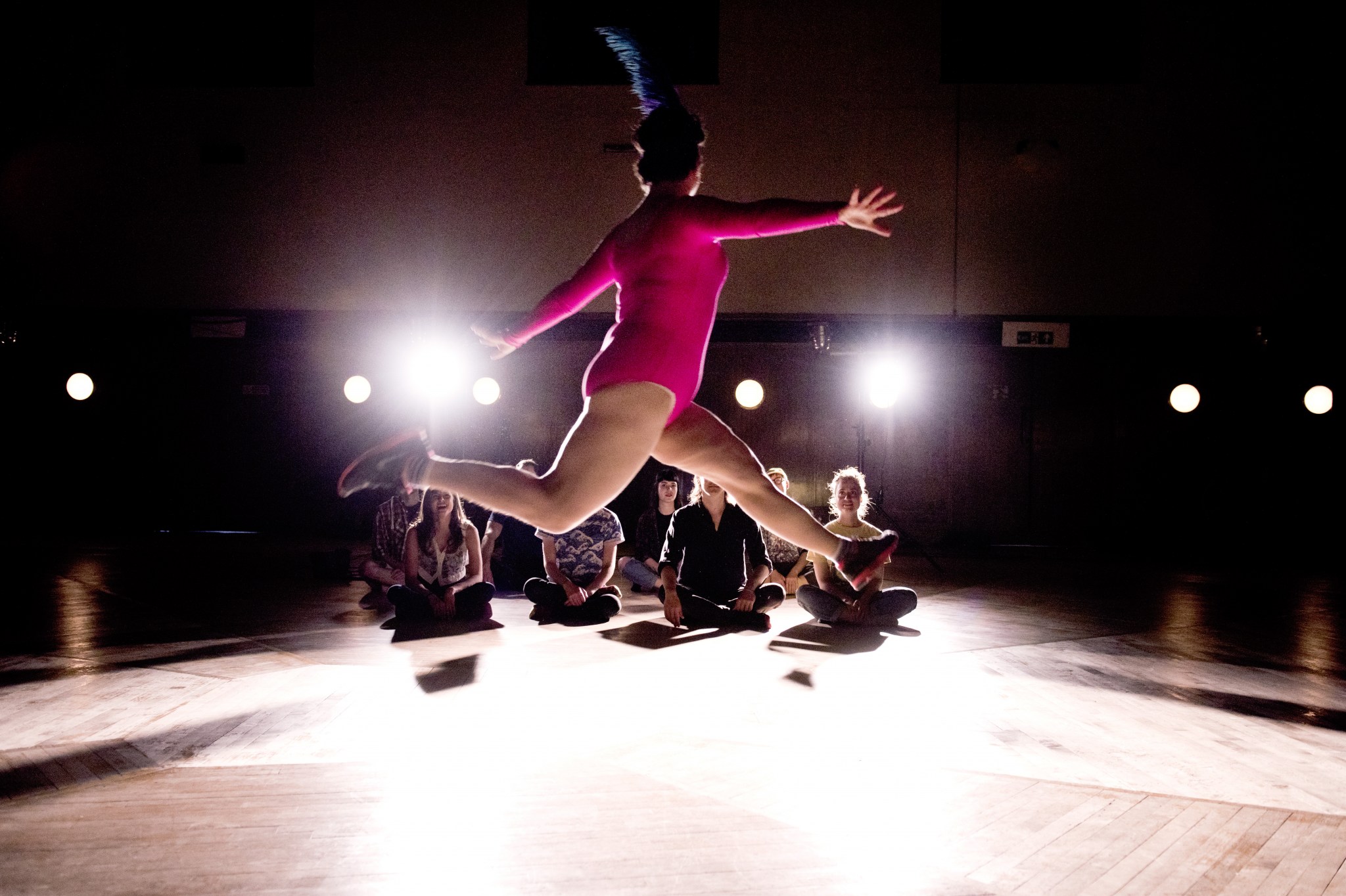
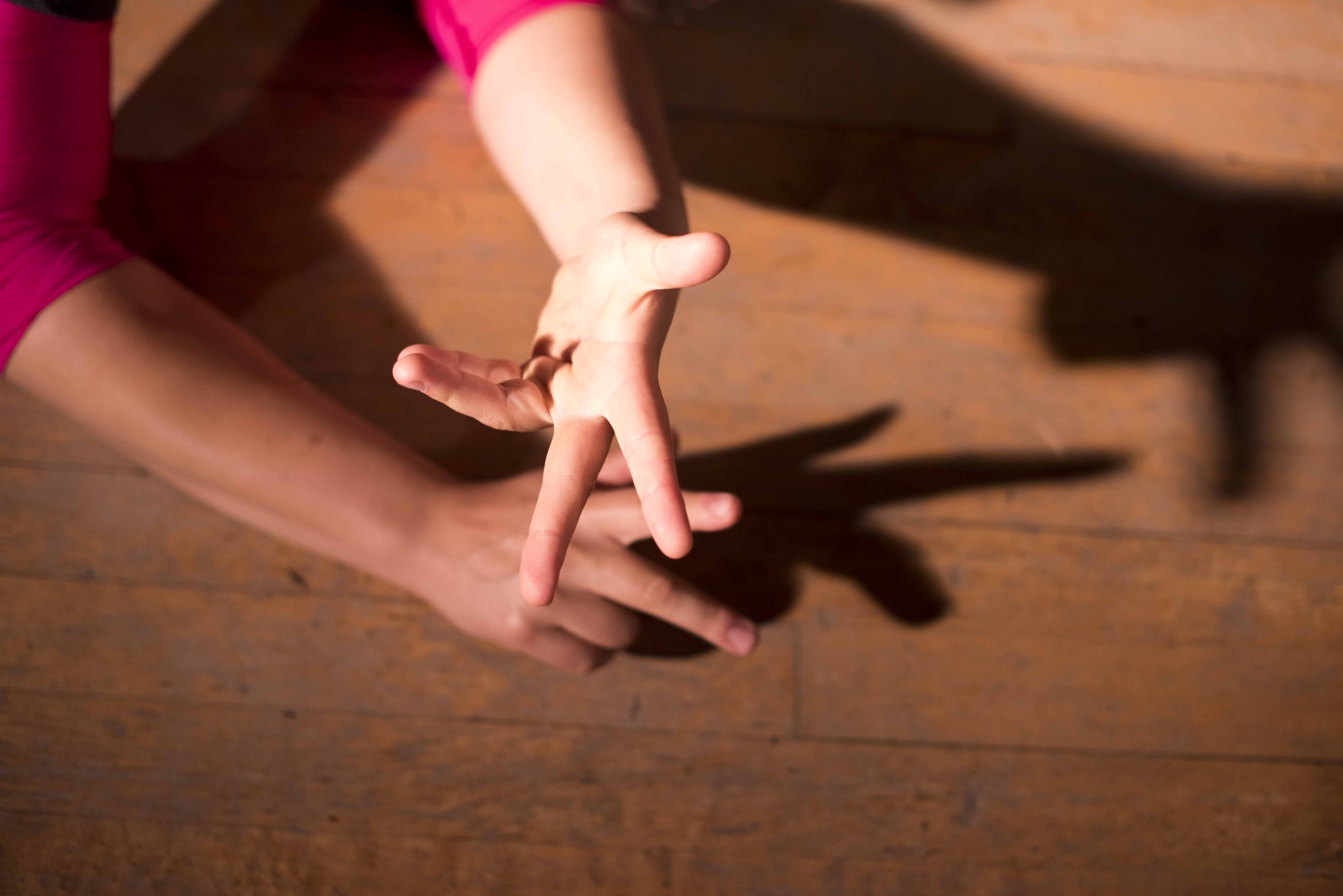
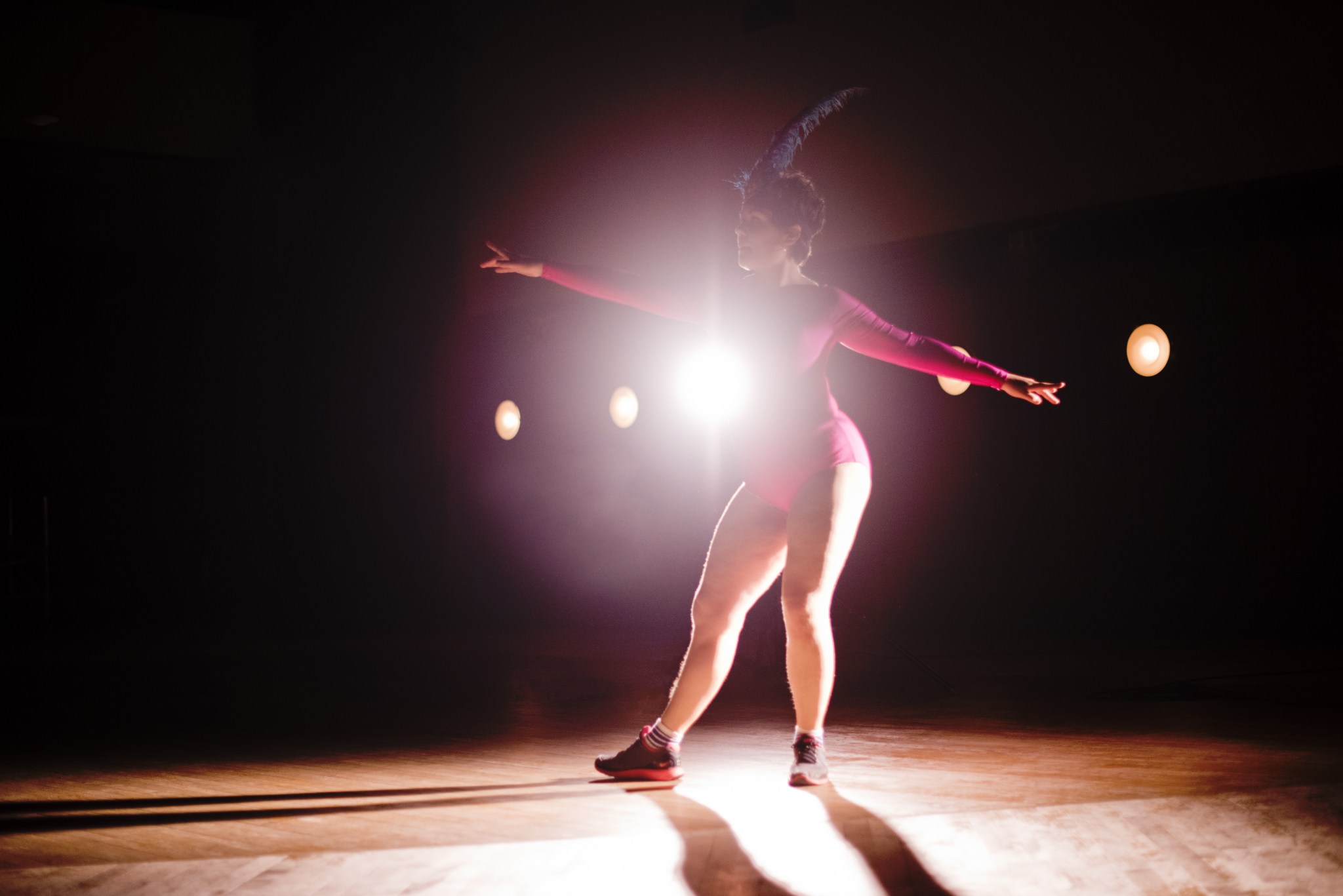
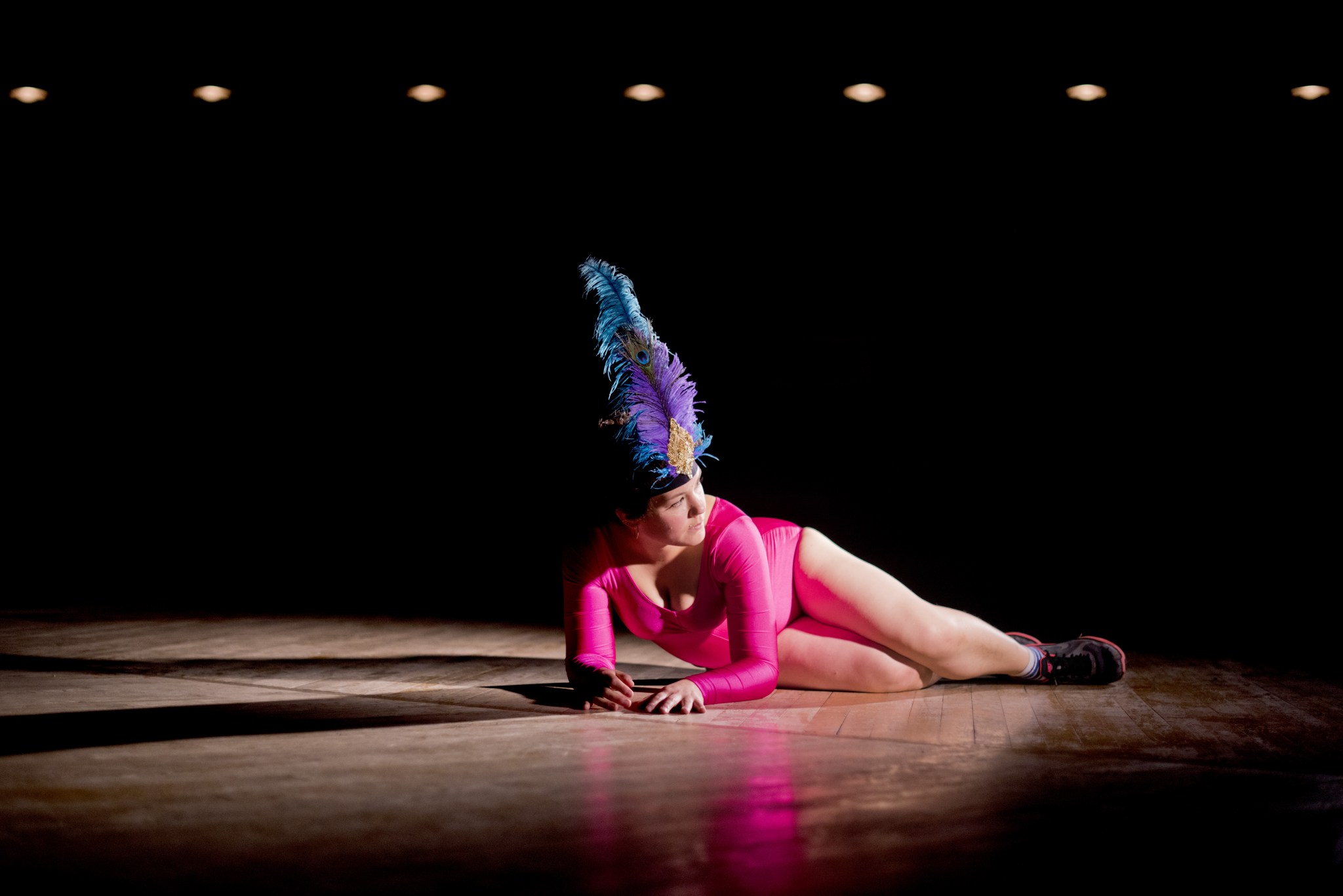
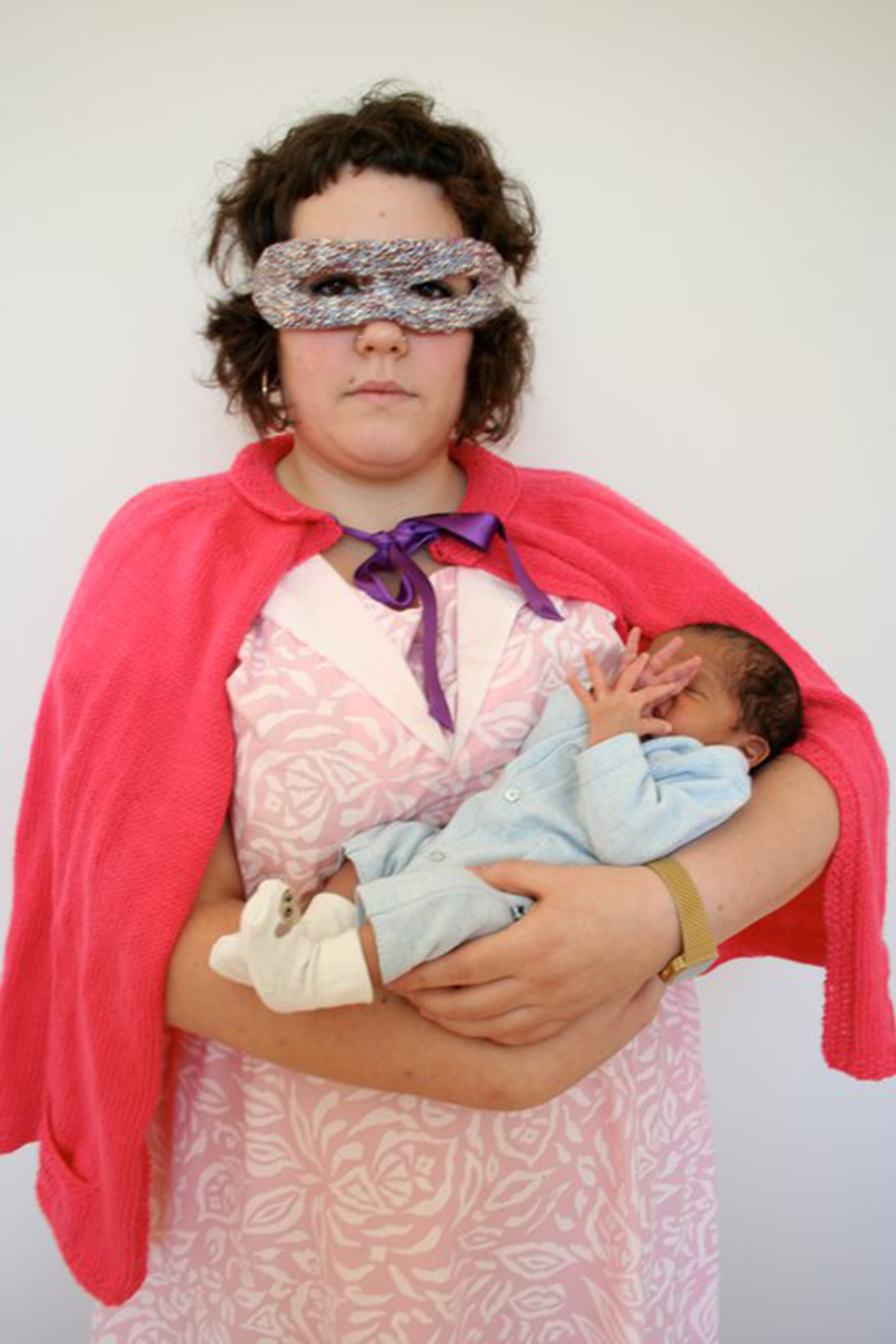
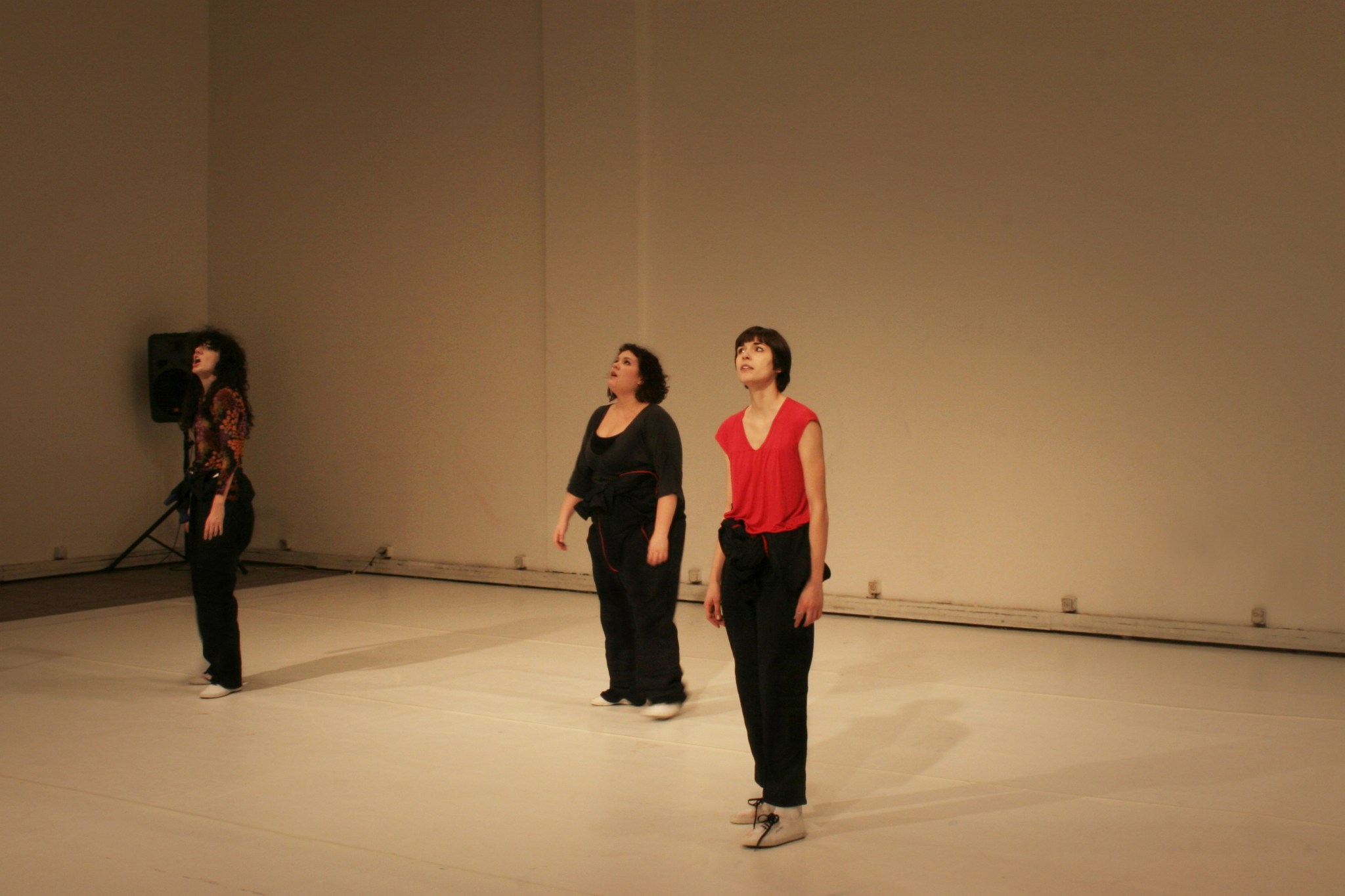
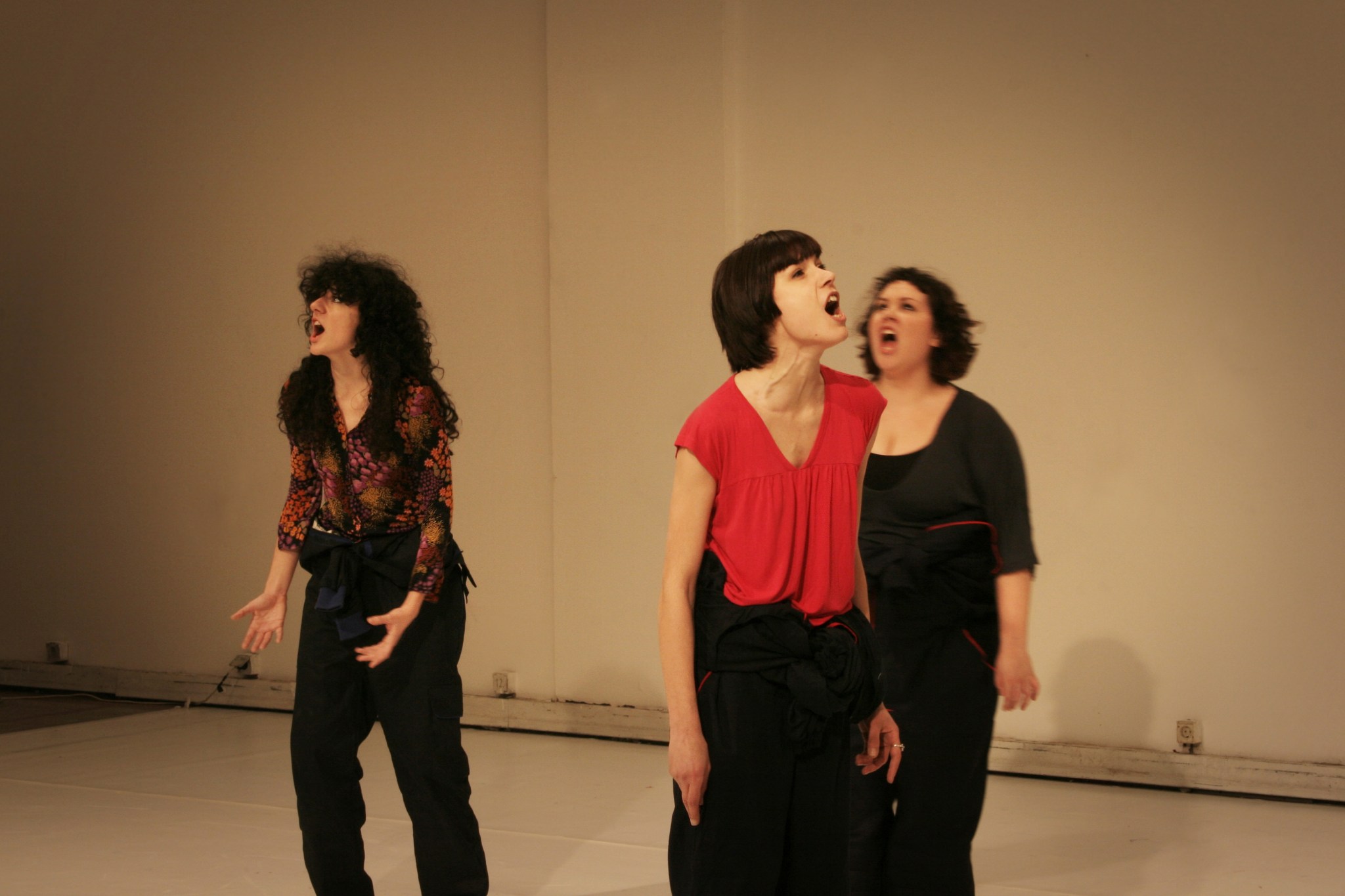
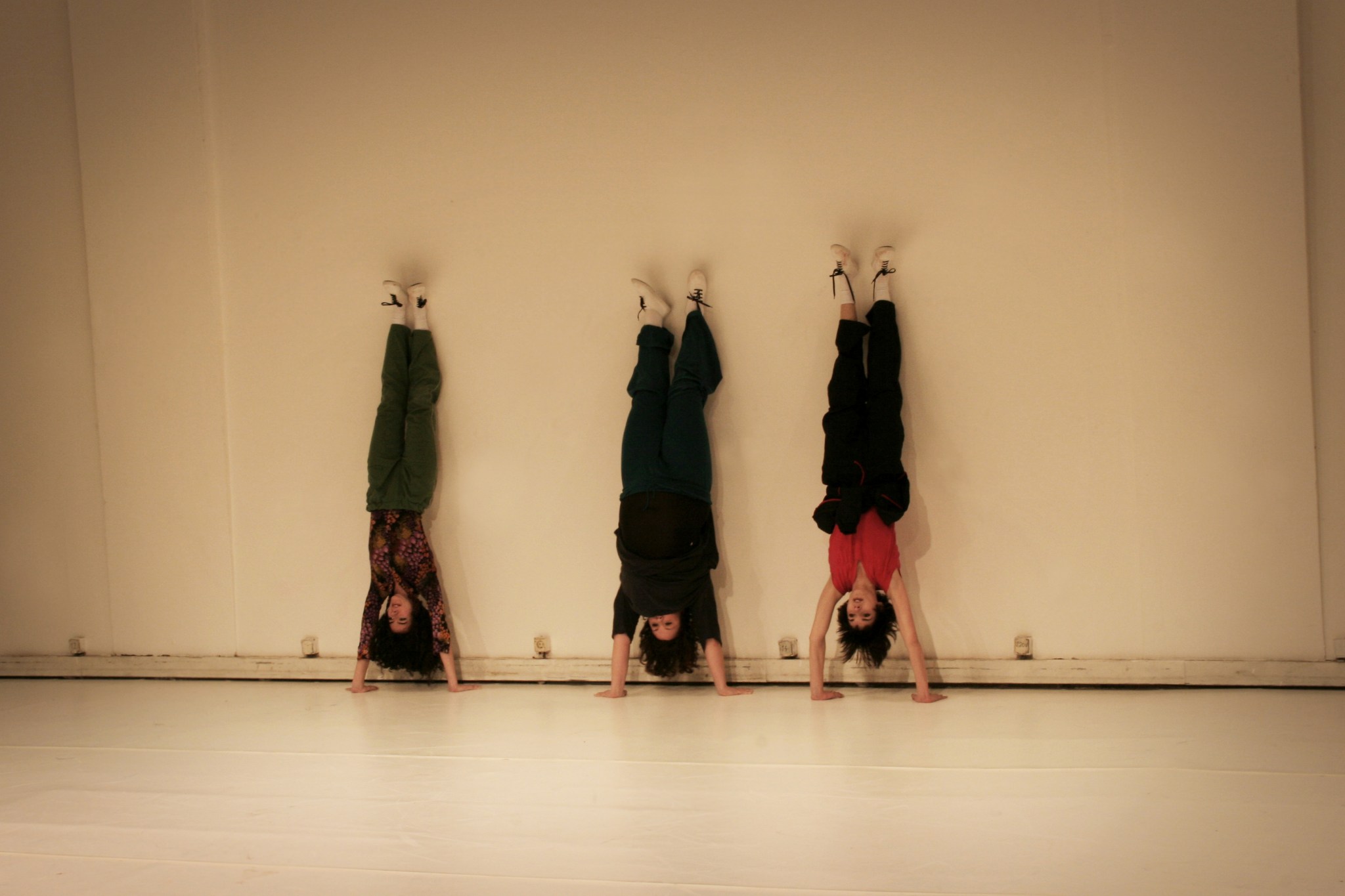
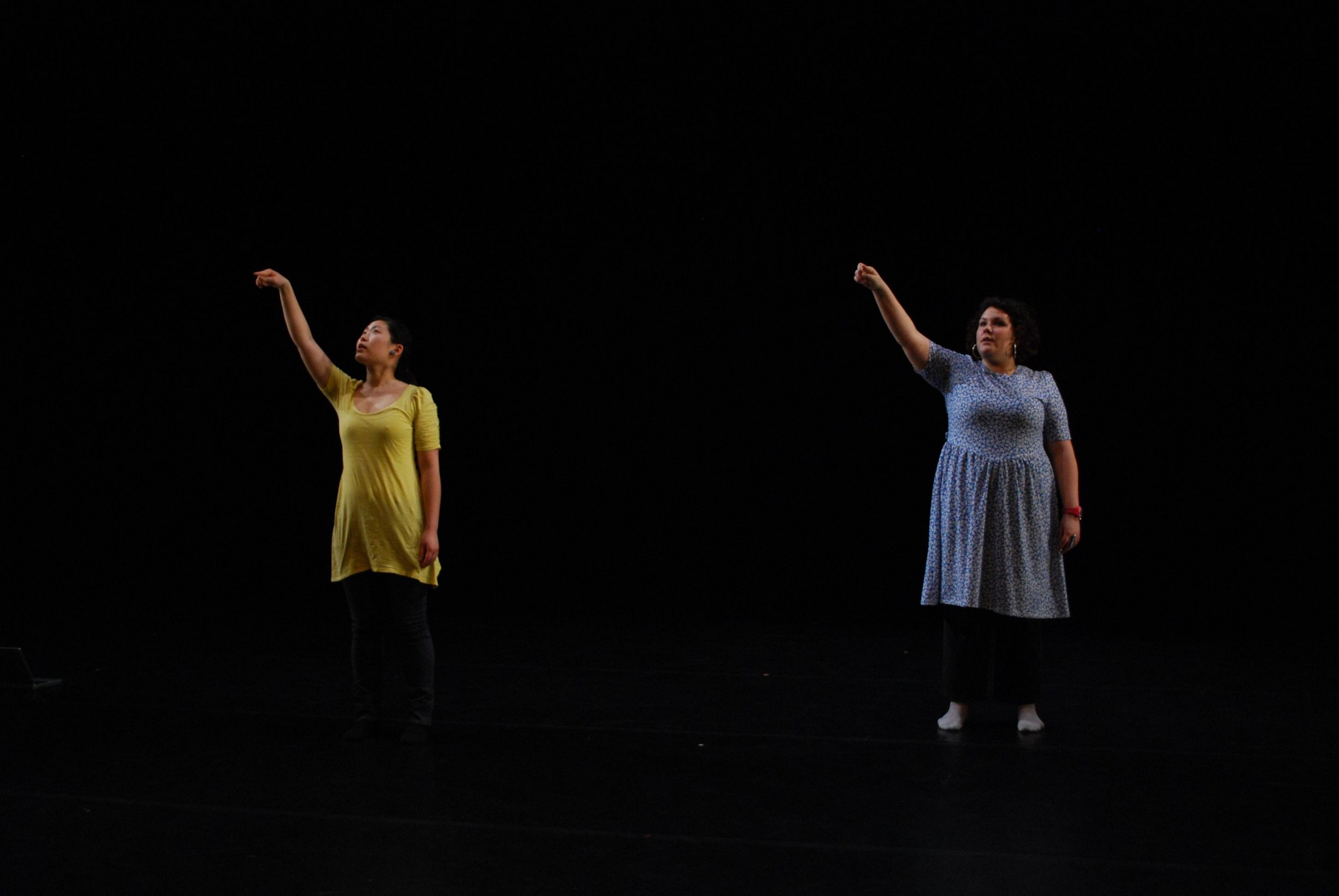
Seven Bridges are a group of older artists and curators supported by Equal Arts. The group appeared in BALTIC’s Ground Floor gallery with their own flags and performing a new live work involving singing and dancing made with Gillie Kleiman, all of which have been created in response to the exhibition during their weekly meetings at BALTIC.

Recreation

Recreation

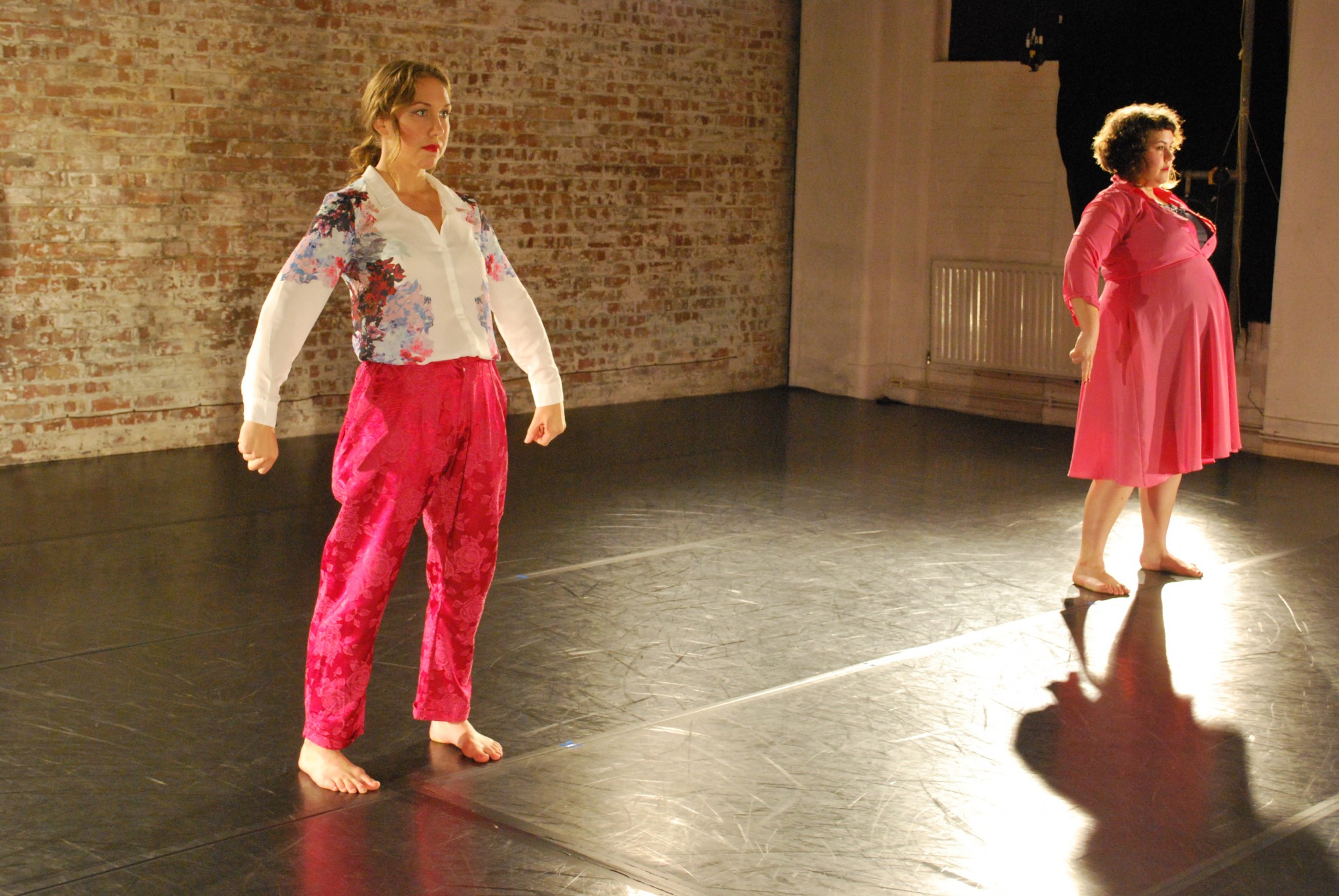
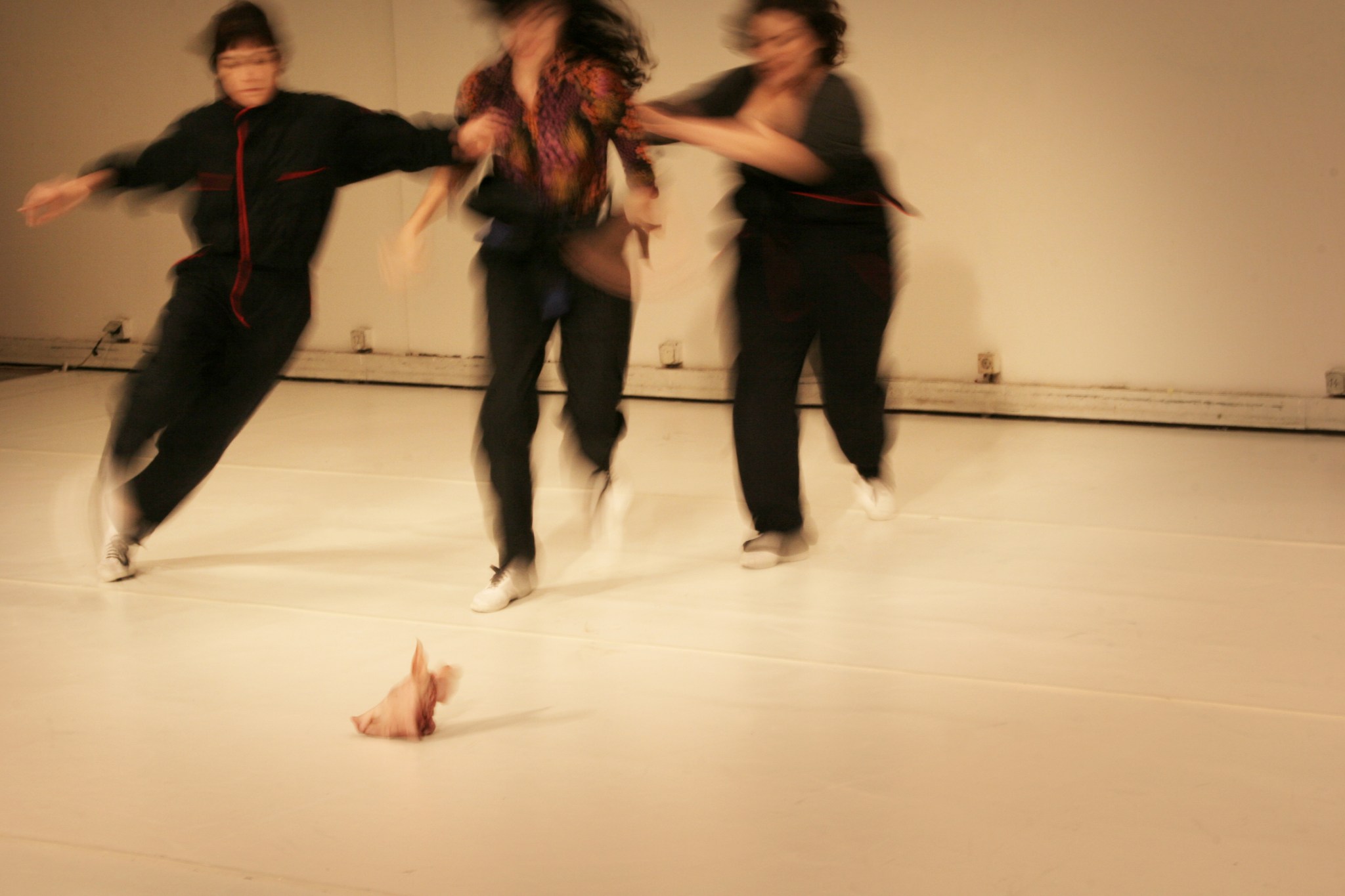
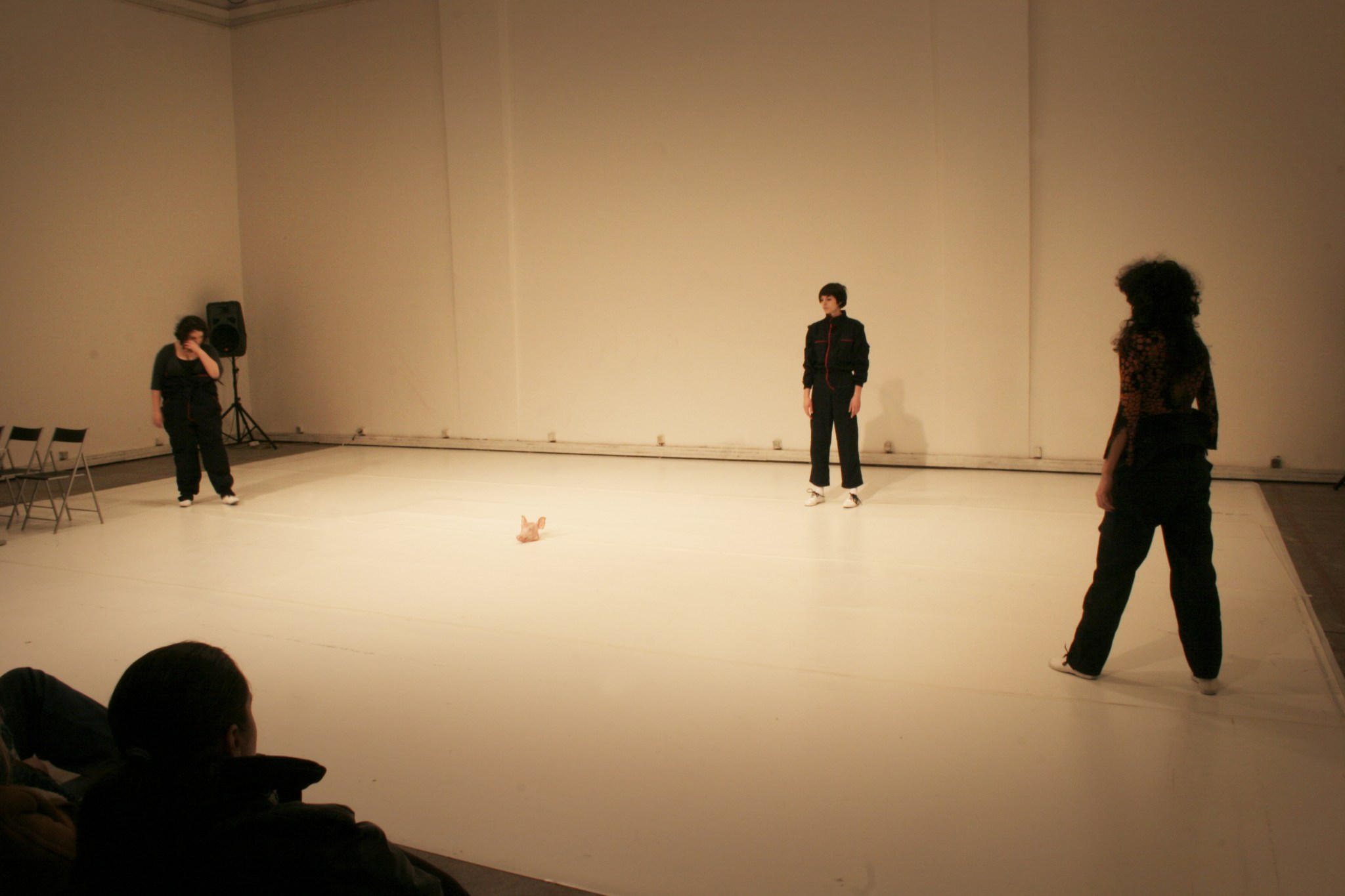
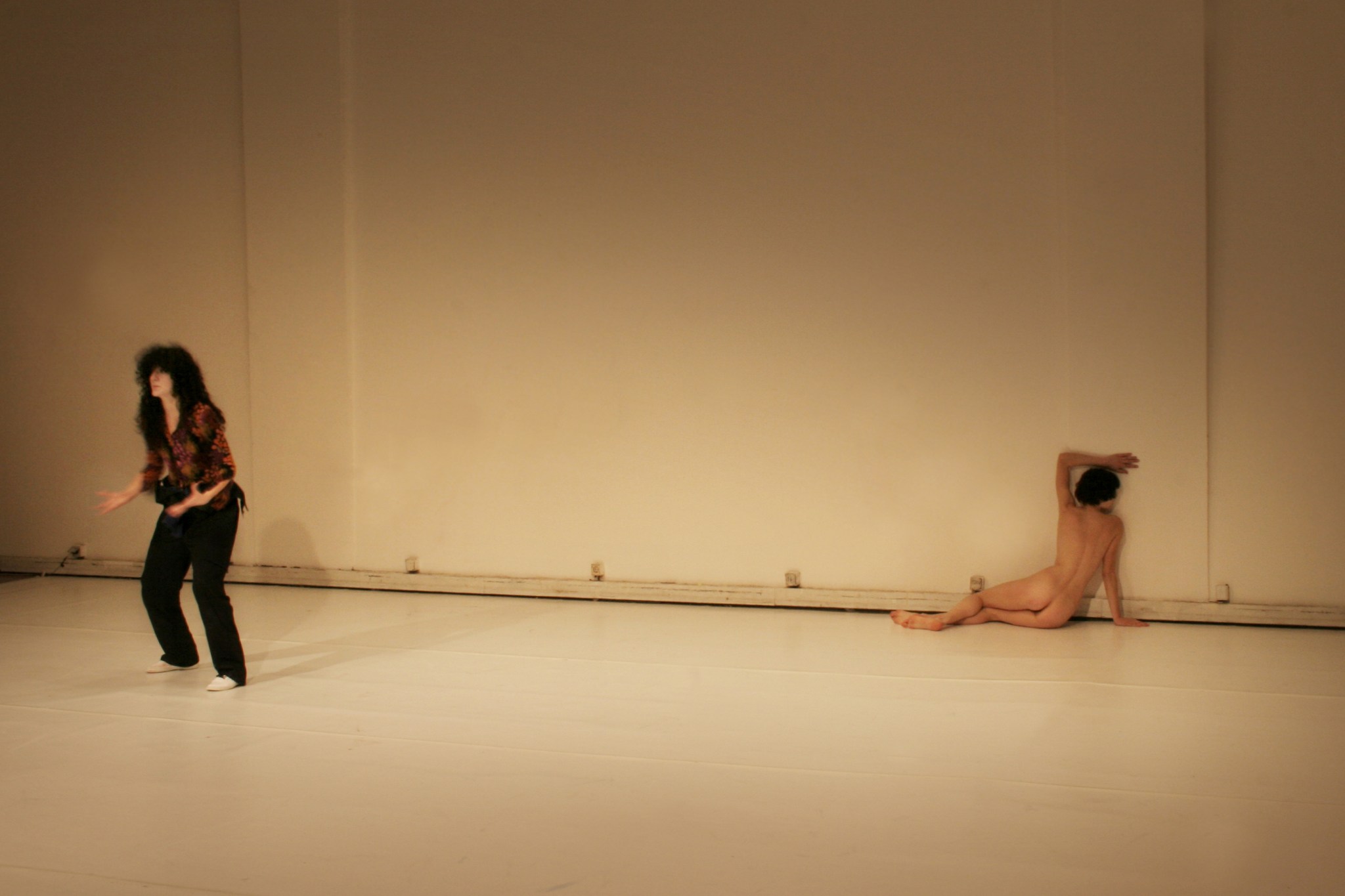
Highly visual, unabashedly experimental and underscored by generous humour, Recreation is a choreography about work. Rather, it's about the things that we do that aren't work, or that aren't quite work. It's a show about caring, about cooking, about sex, about gardening and meditating and singing in the kitchen and playing 5-a-side, and, of course, about dancing.

Performed by professional, not-quite-professional and non-professional dancers – including guest performers local to each venue - Recreation is a lamentation for leisure, a choreographed question of labour, a danced demand for seeing our value beyond our work.

Commissioned by ARC Stockton, Shoreditch Town Hall, and Yorkshire Dance. Supported by Arts Council England, Rajni Shah Projects, Dance4, and via South East Dance and Jerwood Charitable Foundation Dramaturg in Residence programme. With special thanks to Dance City and Northumbria University.

Choreography Gillie Kleiman
Performers Amanda Drago, Victoria Guy and Kit Haigh plus guests
Design and illustration Emer Tumilty
Lighting Designer George Leigh
Producer Beckie Darlington
Artistic Advisor (dramaturgy) Roberta Jean
Artistic Advisor (sound) Nicola Singh
Photography Camilla Greenwell

Generous crowdfunding donors:

Antic
Charlie Ashwell
Christopher Brett Bailey
Katy Baird
Hetty Blades
Hannah Buckley
Sara Burges Houston
Paul Burns
Ramsay Burt
Lydia Catterall
Iris Chan
Hugo Chapman
Seke Chimutengwende
Francis Christeller
Rachael Clerke
Theo Clinkard
Jo Cork
Jennifer Curry
John Darlington
Sue Davies
Wieke Eringa
Kitty Fedorec
Andy Field
Rachel Fullegar
Anna Goodman
Miriam Gould
Susie Green
Camilla Greenwell
Chantal Guevara


Alison Hargreaves
Christie Hill
Katherine Hollinson
R Justin Hunt
Ruth Johnson
Carole Jones
Lalitaraja
Lloyd & Wilson
Avner Kleiman
Tal Kleiman
Lizzie Klotz
Alice Mackenzie
Leah Marojevic
Steph McMann
James Morgan
Jon Opie
Gary Pritchard
Annie Rigby
Rosalie Schweiker
Ellie Sikorski
Lucy Suggate
Louise Tanoto
Alicia Jane Turner
Robert Vesty
Helena Webb
Sophie Williams Brown
Aaron Wright
Michal Yeshanov
Adam Young

9 June 2017 – Yorkshire Dance, Leeds (Preview performance)

22 June 2017 – ARC, Stockton (Premiere)

24 October 2017 - Shoreditch Town Hall, London

19 November 2017 - BALTIC Centre for Contemporary Art, Gateshead

Juncture 2016

Juncture 2016

Juncture was a series of festivals curated for and with Yorkshire Dance, Leeds. The first was curated by Charlotte Vincent, the second by Wendy Houstoun, and the third and final by Gillie Kleiman. Described as 'a festival you do', all of the works in Gillie's iteration of the festival featured the collaboration of non-professional participants. The following is a part of Gillie's opening remarks:

This edition of Juncture presents works made by professional artists where some of the artistic work, usually but not always the performing work, is given to someone who would not consider themselves a professional dancer. There are lots of ways to talk about these works, and cultural policy of different eras would have us filter our thinking about this in varying shades of social amelioration, community-building, and education. A notional 'democracy' looms large, with the suggestion that, in this gesture, everyone gets a chance at something, though I don't know what that something is or or what it does or whether or not we'd want it. Using what you've just done as an allegory, I'd like to suggest that this needs to be rethought as an specialised choreographic practice that can relate to the broad questions of, say, the democratic, in nuanced, challenging and refined ways through each work's specific formal and relational mechanisms. Just like the artists whose work we will see over the coming days, I have given you a form to work with (I've suggested a time, a relation with others, a space, a context, and a medium) and I've given you content, in terms of the topics. I've designed this, and handed the doing over to you. Though, of course, you can choose whether or not to accept my offer, it is my structure to which you say yes or no. I have an agenda to which you will or will not subscribe through your own performance of walking and talking. Just because I have invited you to act, it doesn't mean that this invitation is endlessly open and generous, or perhaps not always in the same way. In short, it's not as democratic as it seems.

Moreover, my sense is that we don't sufficiently grapple with the role and actions of the artist as an artist in the practice addressed through Juncture 2016. We scarcely get to talk about choreography, about dance, about form, when it comes to works that involve non-professionals. So well-rehearsed is dance's collective professional spiel about the social purpose of these practices that we, that I, at least, can become blinded to the formal invention, the choreographic drive, the relational articulacy, the intellectual weight, and the theatrical brilliance of these works. Usually a festival or a season has only one work with this invitation to non-professionals, so it is discussed and remembered through that paradigm alone. In this we all lose out, deadened not only to the disciplinary advancements being made but also to the always newly-arising political potentials. By bringing several of these works together, then, this is unique opportunity to wrestle with our assumptions with what these works have in common, going deeper and further in that set of concerns, *and* a chance to look past some of the surface similarities of the projects and seek to become more articulate about their differences in relation to the disciplines of dance and choreography and in relation to broader, extra-disciplinary concerns.

And these works are concerned with the world. They may not articulate their social engagement through language more familiar in this domain, but each one of them is dealing with concrete political proposals in danced terms. To greater or lesser degrees, the works of Juncture have handles on humongous social issues like gender, feminism, access, diversity, power, commonality, professionalism, age, class and so on, each possessing an angle that I find valuable, on its own and in relation to the other works. There's a tremendous diversity in the method, and indeed in the nuance, but altogether there's a distinct and active politics that appears in the festival as a whole in conversation with each of the individual artistic proposals.

Many of these areas speak to the driving values of the community dance movement, historically and contemporaneously. I grew up in community dance and my perspective on dance has been built through it. When I started to devise the curatorial agenda of Juncture, I remember the exclamation "It can't be a community dance festival!". My response was to backtrack, to find new words to speak to my interest. Now I can say unabashedly that I think it *is* a community dance festival, a dance of multiple communities in relation to the community dance movement. I may be stretching this idea a little, and I don't know to what extent that's a useful move, but I'd like to extend the invitation to think through the festival with this lens. My suspicion is that community dance and experimental dance and choreography have more to say to one another than we would like to think. I, for one, would love to see this conversation grow, so that each can learn from the other, and we can together move away from the conservatisms that each one accidentally or deliberately maintains. I hope that this festival can be a place to do that.

Community dance is a British phenomenon to a degree - other dance cultures don't appear to make the same divides, nor the same advancements, along these lines. In the world of experimental dance and choreography, British dance is very often lamented as being a bit shit. British artists find it harder to get programmed in other countries, and our organisations are often disconnected from relevant co-production or presentation circuits. Juncture is an international festival, though: that was the brief, and I like to think that I answered it. But most of the artists have some relationship to British dance even when they are not based in Britain. I think we really need to stop telling ourselves and others that dance made in or in connection to Britain is any less rigorous, impactful, inventive or really bloody good than dance from elsewhere, but to advocate for those practices that do participate in our community of excellent dance and choreography, and learn to speak better about what they're doing. We're an island in more ways than one, and this can produce fascinating differences as well as frightening ones. Beyond the individual works, I'd say that the festival is a deeply British festival, gathering around concerns that, though not unique to our island or to our dance practice, are certainly more present here. Have it be known, though, that this is not a nationalistic, defensive impulse in the curation. Rather, I'm interested in how artists and the field attend to issues of locality - geographical, social, artistic, disciplinary and so on - without resorting to the same kinds of conservative and mind-numbing but persuasive populism that plague both British dance and British society, and get us into devastating and terrifying political situations of different scales.

As you may have noted, I am indeed using this opportunity to share some of my more emotive concerns. This isn't just a soapbox, though - I wanted to demonstrate how one can apply different filters to the same object, in this case our festival, to think different things, to see new angles or consider alternative perspectives. Each of the topics you have spoken about can act as a tool for the navigation of the festival - maybe you heard a short lecture on karaoke, which I see as non-professional performance out in the wild, or perhaps you spoke about labour, my own favourite filter. I'd love to hear what comes to you as the major themes as the festival progresses, and those who will stick around might like to join us for the closing on Sunday, where we can take another look. We've a busy festival ahead of us, including the incredible immigrants and animals tonight, presenting their work LAURA LAURA DOUBLE PENETRATION with a new duo of locally-based non-professional performers over at Live Art Bistro. Thanks for joining us for this opening moment. Perhaps after another brief drink or chat we can head over. See you there!

…neither use nor ornament

neither use nor ornament

...neither use nor ornament was a research project in 2013-4. It was a solo project, obsessed with ornament, wherein I invited three independent choreographers to come and be the guest director. I was working with myself as a performer and as a director, how I could pass on information, and how I could develop my skills. The invited choreographers were Gaby Agis, Theo Clinkard and Roberta Jean.

Photography Gillie Kleiman / Susie Green
Invited choreographers Gaby Agis / Theo Clinkard / Roberta Jean 

Supported by Artsadmin


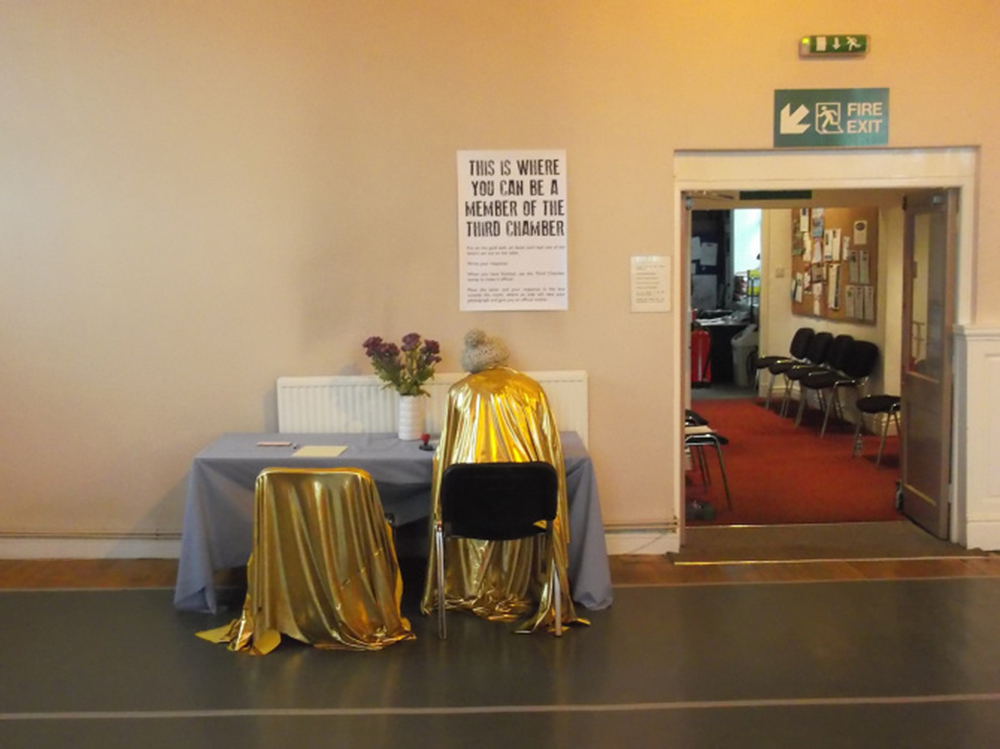
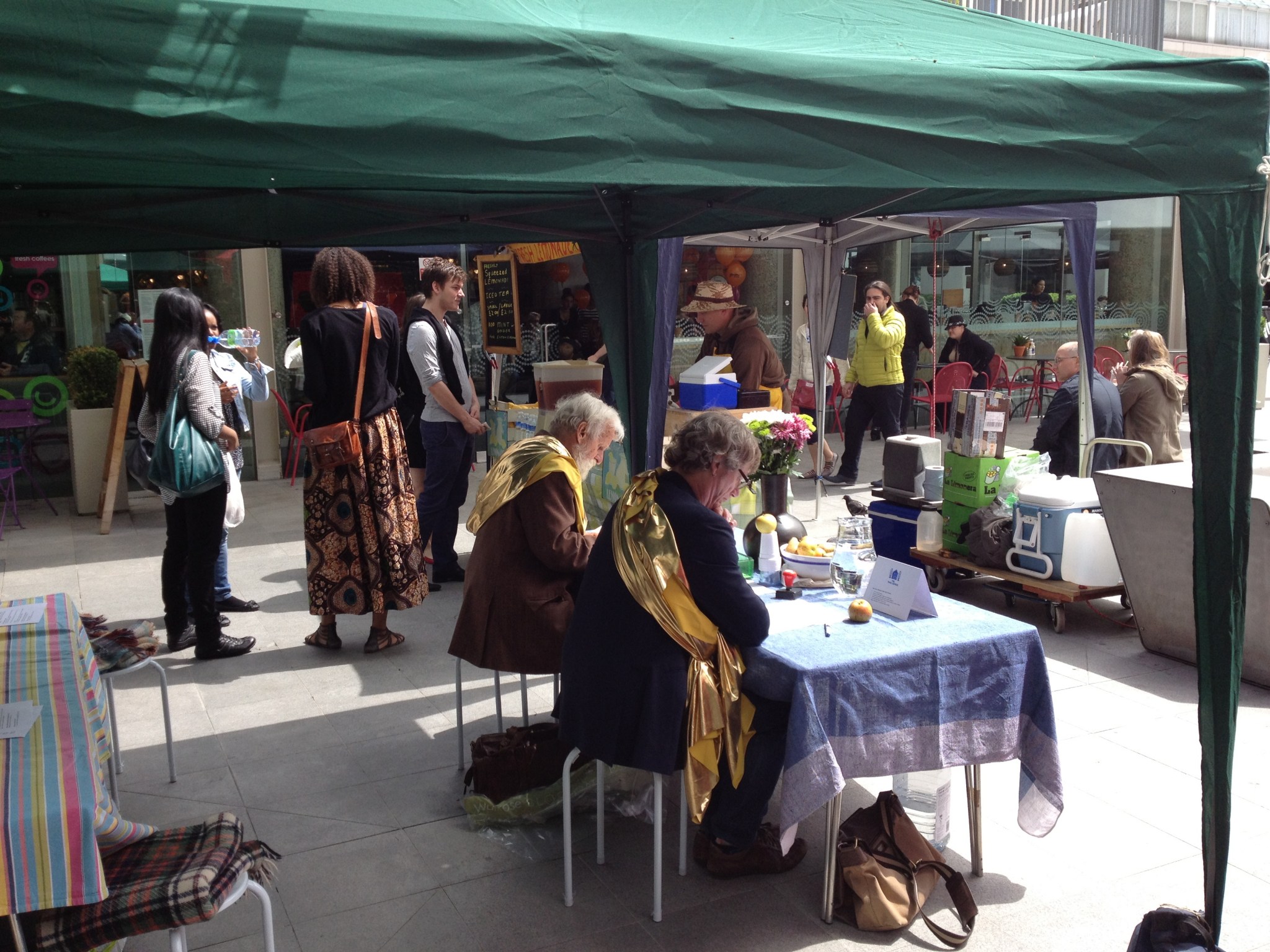
The Third Chamber

The Third Chamber

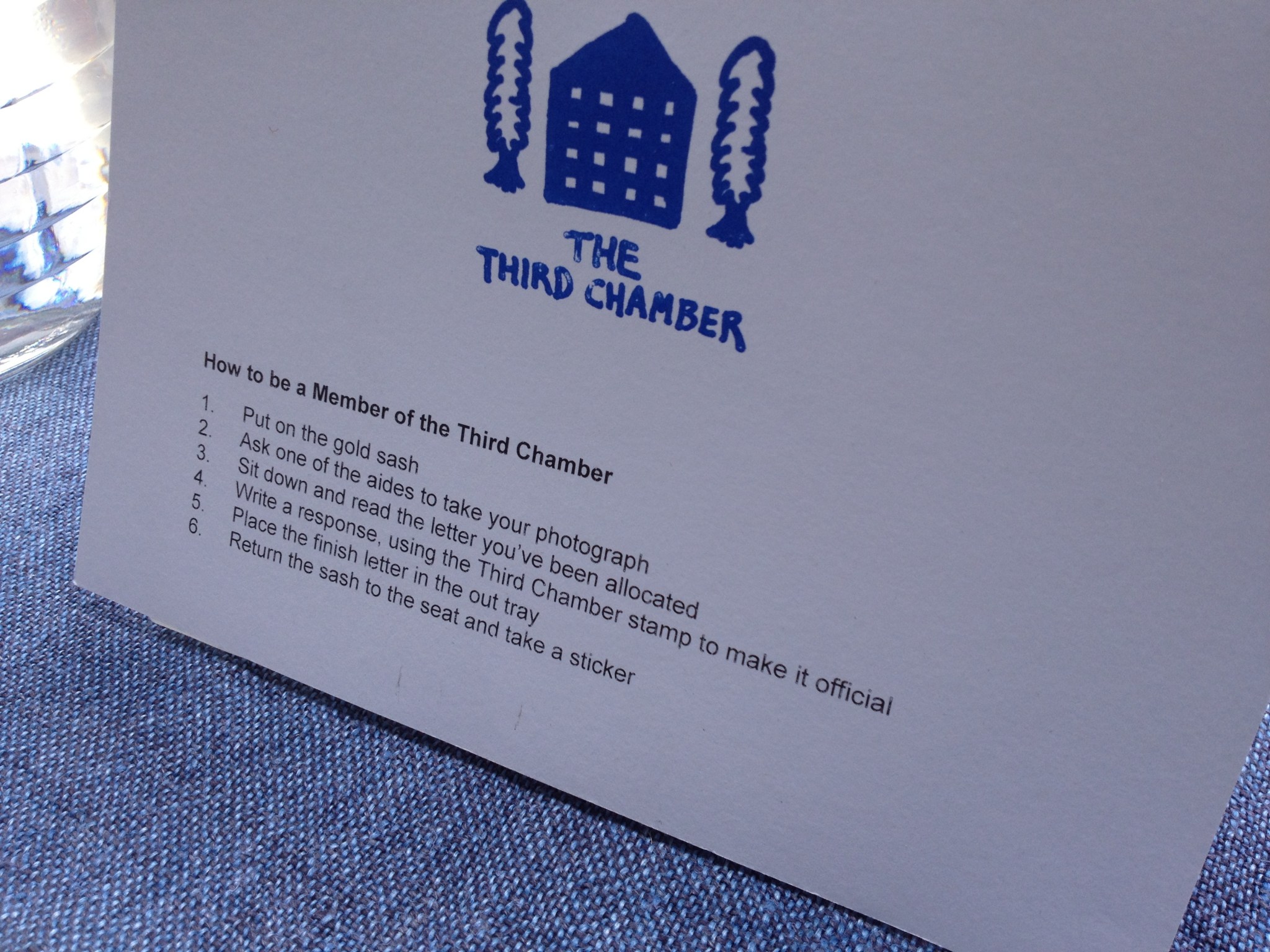
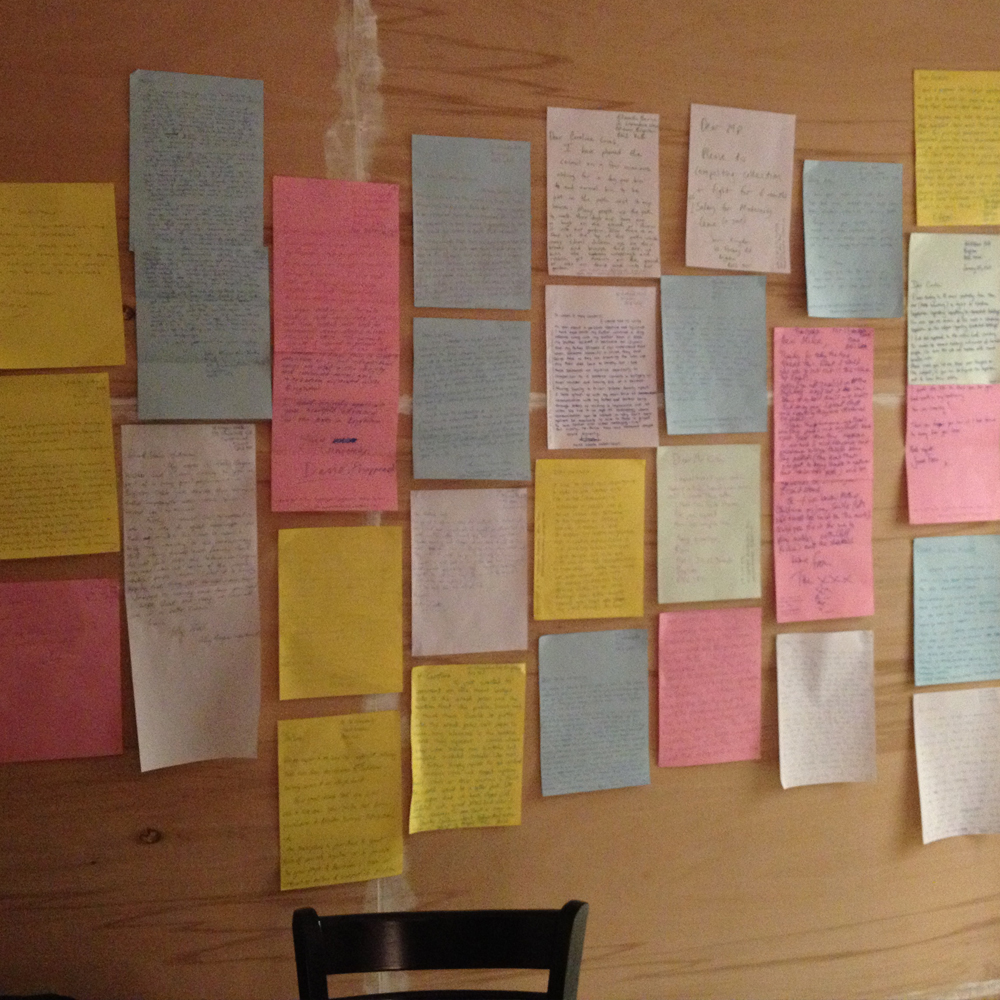
is the third house of parliament - an appendix to the House of Lords and the House of Commons - made up of volunteers. During each sitting, members of the public can write to a Member of the Third Chamber (MTC) and/or volunteer to become an MTC and answer one of these letters.

Choreography Political Animal (Gillie Kleiman and Hamish MacPherson)
Photography Hamish MacPherson

Supported by Rajni Shah and Beyond Glorious, LEAP, and Ludus Festival

Presented at Brunswick Centre (London), Ludus Dance (Lancaster), Beeston Park (Leeds), Merrion Centre (Leeds), Bramley Shopping Centre (Leeds) between 2013 and 2015.

A Lyrical Dance Concert

A Lyrical Dance Concert

A Lyrical Dance Concert is a party in a comedy double act in a cabaret show in a gig in an experimental dance performance. Number-by-ridiculous-number, the lyrics of chart hits past and present are danced out – stretched, turned, lifted and thrown. With joyful irreverence and serious fun, the show insists that pop music belongs to us and can do what we want it to do. Get your glad-rags on, grab a drink and a pal, and giggle along with this mixed-up whirlwind of glamorous divas, guitar solos and gangster rappers…

Choreography Gillie Kleiman and Sara Lindström
Performers Gillie Kleiman and Sara Lindström (2013)/ Eleanor Sikorski (2014/5)
Producer Beckie Darlington (2014/5 tour)
Additional design Susie Green
Photography Martyn Boston / Camilla Greenwell

Supported using public funding by the National Lottery through Arts Council England. Production and 2013 tour co-produced by Dance4.

Generous crowdfunding donors:

Richard Bliss
Anaïs Bouts
Tony Burch
Lynn Campbell
Iris Chan
Kate Craddock
Kattrin Deufert
Laurent-David Garnier
Ina Dokmo
Claire Hicks
Catherine Hoffman
Cate and Avner Kleiman
Tal Kleiman
Karen Lambæk
Malin Lindström
Solveig and Ingemar Lindström
Christer Lundahl
Alice MacKenzie
Hamish MacPherson
Tom Martin

Matthew Mazzucchi
Marian Milbourne
Angela Miles
Paul O’Keeffe
Joakim Olsson
Nathalie Paris
Hetain Patel
Luke Pell
H Plewis
Thomas Plischke
Verity Quinn
Tim Rubidge
Martina Seitl
Ellie Sikorski
Robbie Synge
Lucy Teed
Ruth Turner
Annabel Turpin
Debbie Waistell
Flora Wellesley Wesley
THANK YOU


At the end of every performance we recorded a music video with the audience members. Only those present got the password - you had to be there! The videos are here: alyricaldanceconcert.wordpress.com/you-had-to-be-there/

As part of our research we asked questions. We shared these questions with other artists, who responded in various ways. You can see these answers here: alyricaldanceconcert.wordpress.com/questions/


Documentation available on request


Jam Café (excerpts), Nottingham, March 2013

Create Theatre, Mansfield, March 2013

Jam Café (full show), Nottingham, March 2013

Mink, Middlesbrough, April 2013

Dance City, Newcastle, April 2013

GIFT, Gateshead, April 2013

Y Theatre, Leicester, June 2013

Newark Palace Theatre, June 2013

Picturedrome, Northampton, June 2013

Create Theatre, Mansfield, June 2013

Lincoln Drill Hall, Lincoln, June 2013

Stratford Circus as part of Dance Umbrella, London, October 2013

Norwich Arts Centre, Norwich, November 2014

Greenwich Dance, London, November 2014

Shoreditch Town Hall, November 2014

Nightingale Theatre at The Basement, Brighton, November 2014

Seven Arts, Leeds, November 2014

Northern Stage, Newcastle, February 2015

The Maltings, Berwick upon Tweed, February 2015

Double Act

Double Act

a diptych of dance, celebrating comedy

DOUBLE ACT takes beloved forms of comedy and filters them through choreography to create two distinct but related dance performances in one evening.


In the first work of the evening, Double Act, the stand-up comics have been silenced, their movements rendered dance. The hand-flicks, chin-strokes, and finger-points of stand-up comedians from around the world are brought together to form an intricate and virtuosic choreography. But it is stand-up, nonetheless, and you will be enthusiastically invited to heckle at the dancers, in a performance that shifts between delicate dancing and eager rabble-rousing. You bring the cheers and claps – we’ll give you the tomatoes to throw, and the reason to throw them.

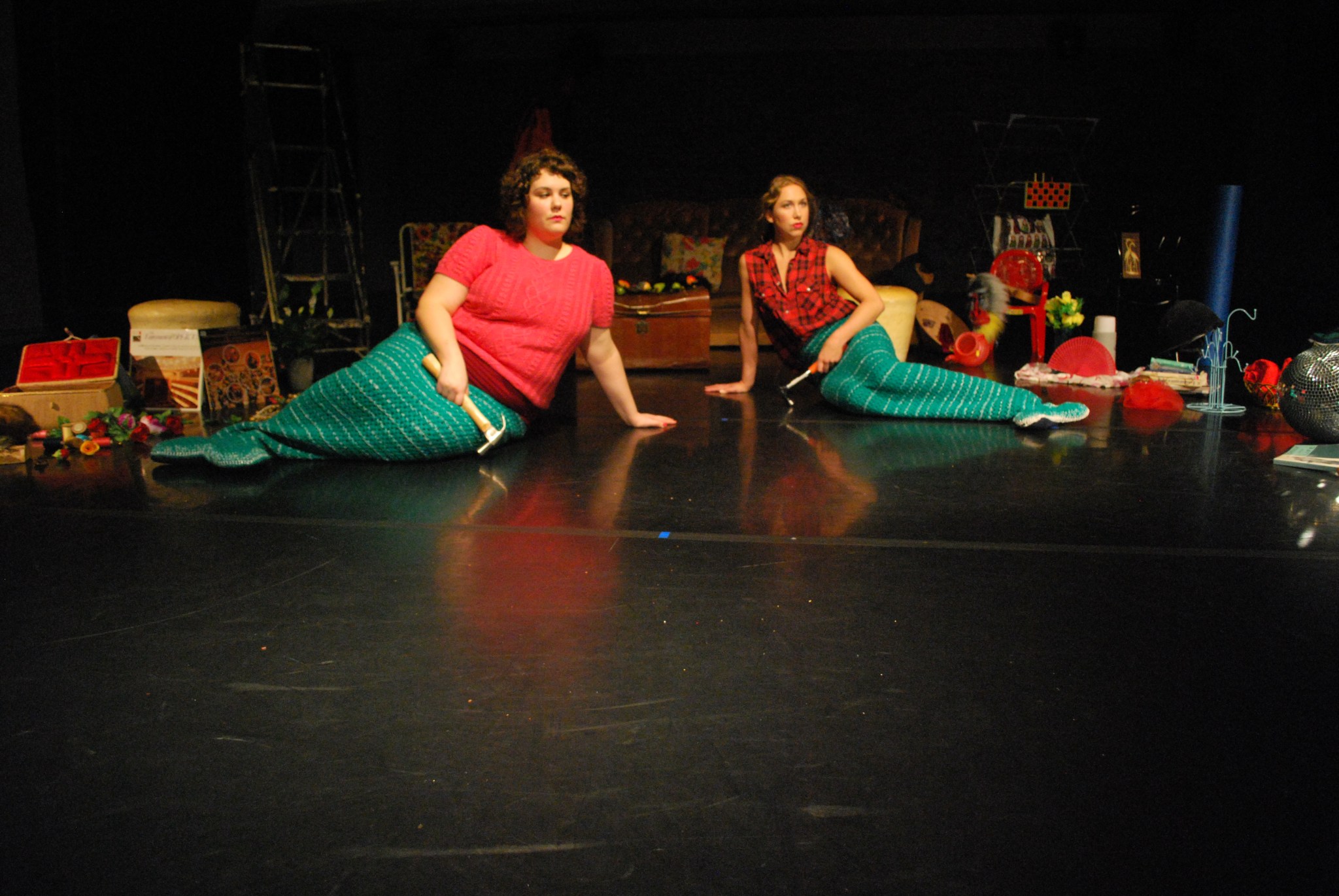
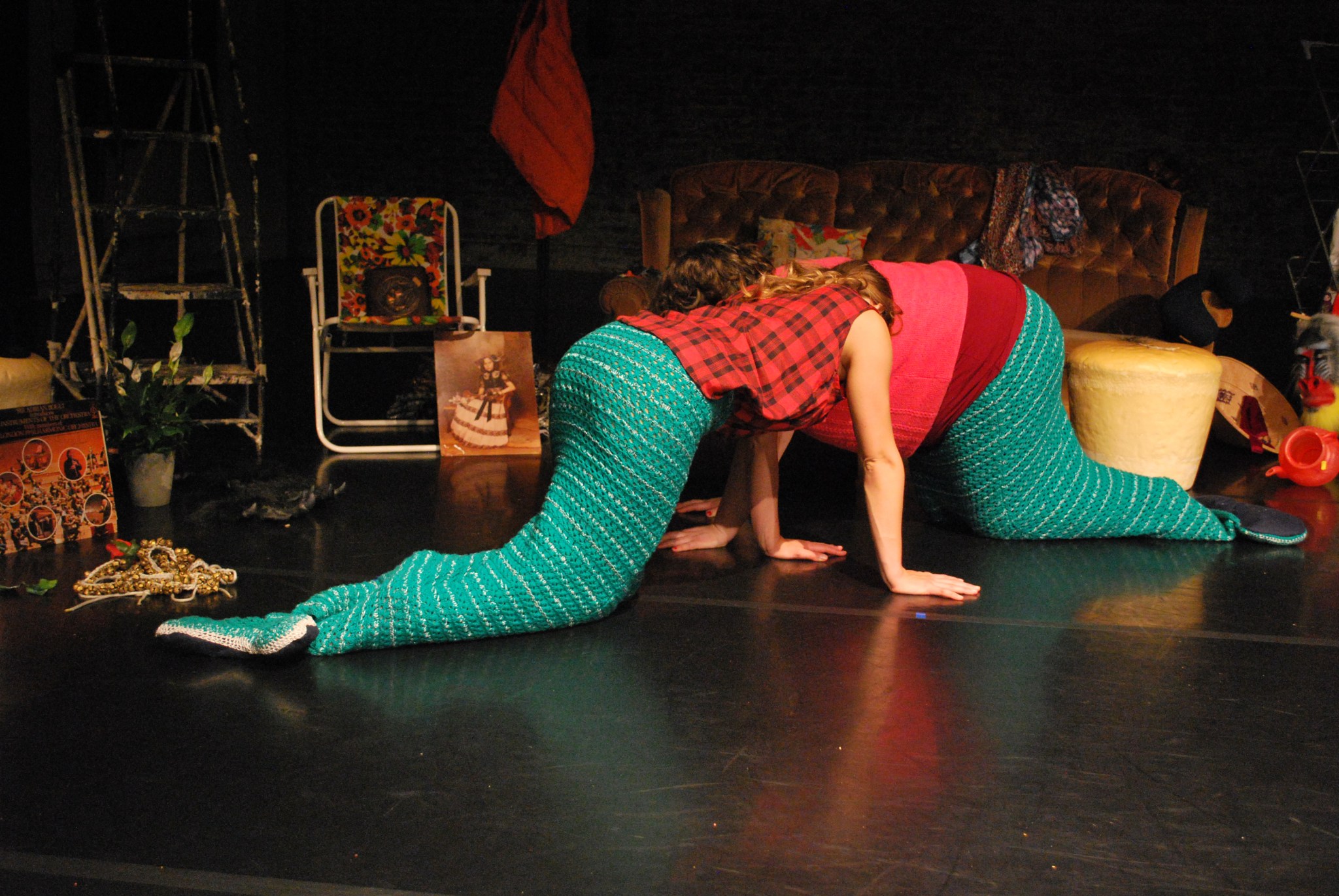
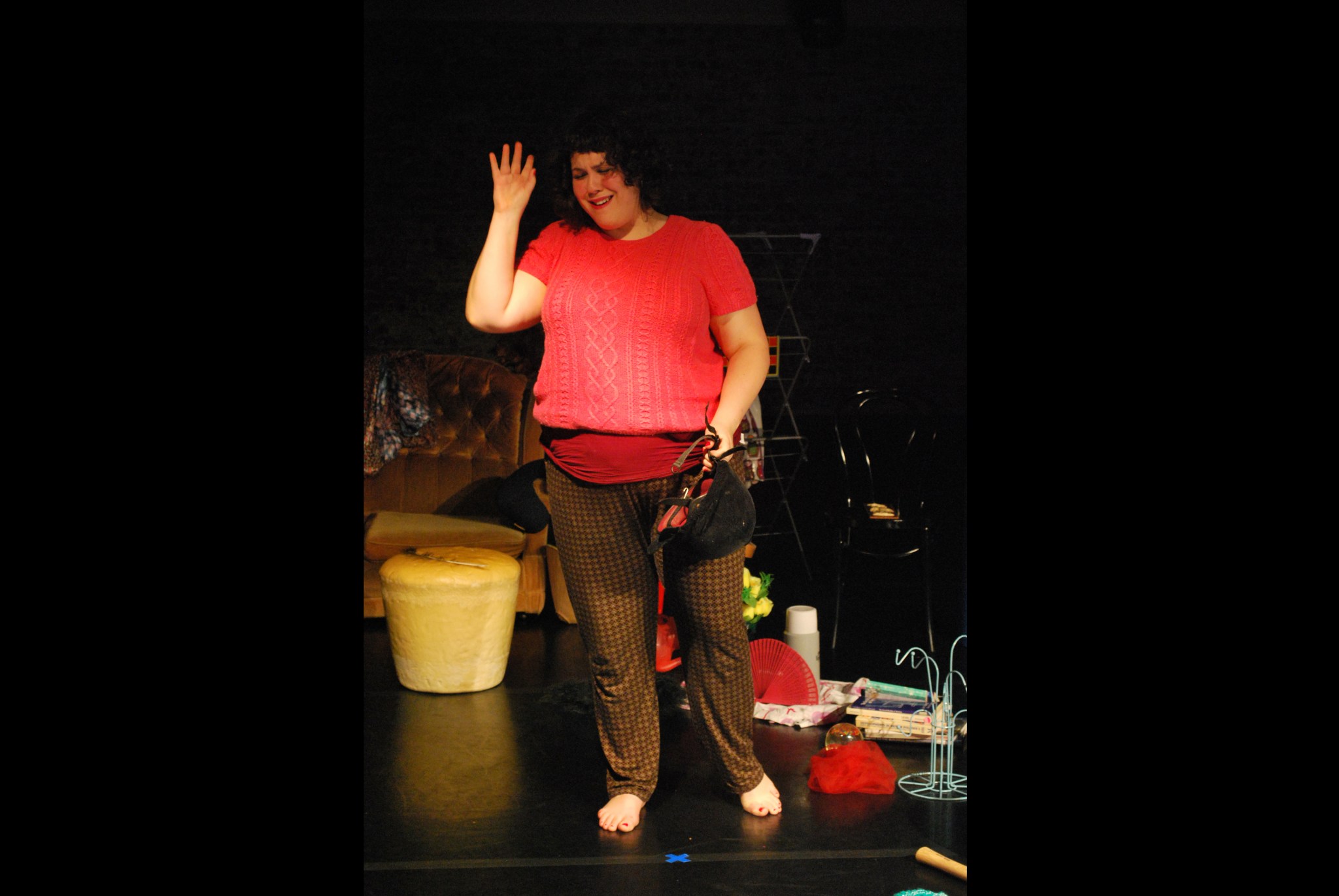
Imagine what might have happened if the Smack the Pony team met the Muppets and decided to make a moving sculpture, or if Monty Python had taken on Pina Bausch in slow-motion, and you’d come close to the evening’s second work, The Mermaid and The Hammer. Set amongst what could be the contents of Mighty Boosh props storeroom, two dancers move through a world of constant transformations, each scenario as ridiculous as the next. Suspending the punchline for each twist of logic, divas, giraffes and mermaids appear and disappear in a circulating game of joke-hunting.


Choreographed and performed by Gillie Kleiman and Karen Lambæk
Photography Eleanor Sikorski

This work was supported using public funding by the National Lottery through Arts Council England with additional support from ARC, Newcastle College, Pianofabriek, Vooruit and WorkSpaceBrussels.


ARC, Stockton Arts Centre, October 2012

Chisenhale Dance Space, London, October 2012

BELLY of The Beast, Sadler's Wells, London, January 2013

The Democratic Dance Team

The Democratic Dance Team


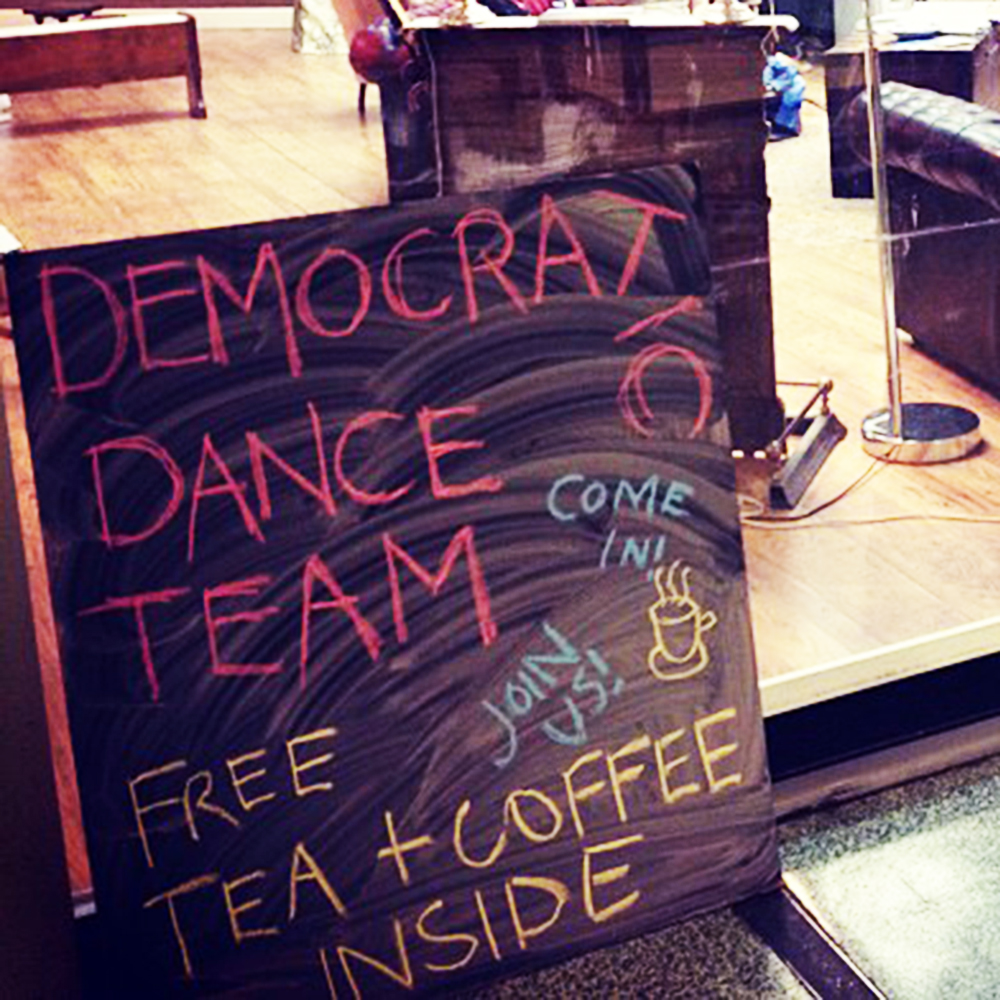
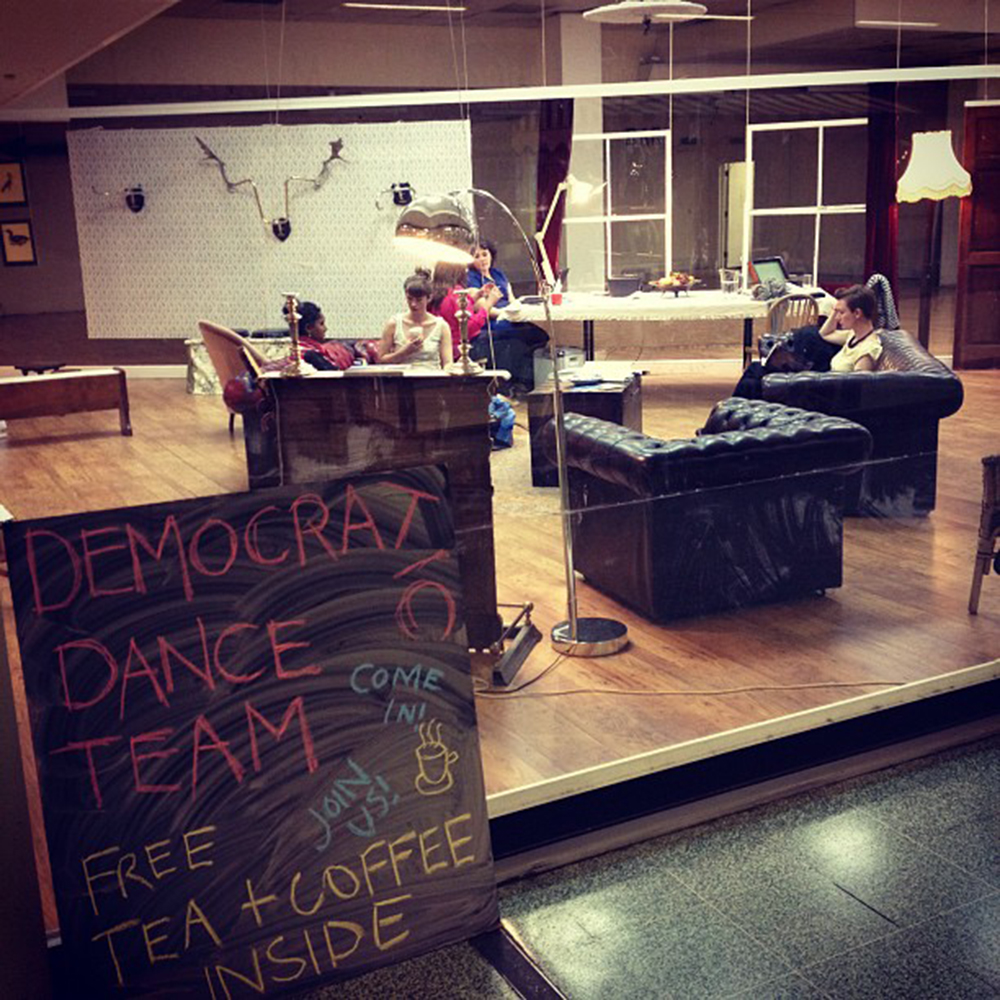
I like to write to Members of Parliament. I like to write to them because through this I exercise my democratic muscle, muscle that can sometimes get wasted away despairing and complaining about the things that are happening around me. I like to write to them because it reminds me, and them, that elected persons are responsible to the people who live here and not the other way around.

This is a kind of dance, a choreography that re-routes powers with new actions. It’s a movement in and of itself, and it produces new waves of motion. It’s a dance that I could try alone, but that I’d rather do with others. You are invited to join me. I will be waiting, ready to talk about what is important to us, and ready to make moves by writing to those who might be choreographing our worlds in ways we want to rethink.


Public House at Elephant and Castle Shopping Centre, London, July 2012

The Nightingale Theatre, Brighton, January 2013

//BUZZCUT//, Glasgow, March 2013

GIFT, Gateshead, May 2013

Steakhouse Live at Holloway Arts Festival, June 2014

As I Live and Breathe, De La Warr Pavilion (presented by Home Live Art), June 2019


Documentation and blog: democraticdanceteam.wordpress.com

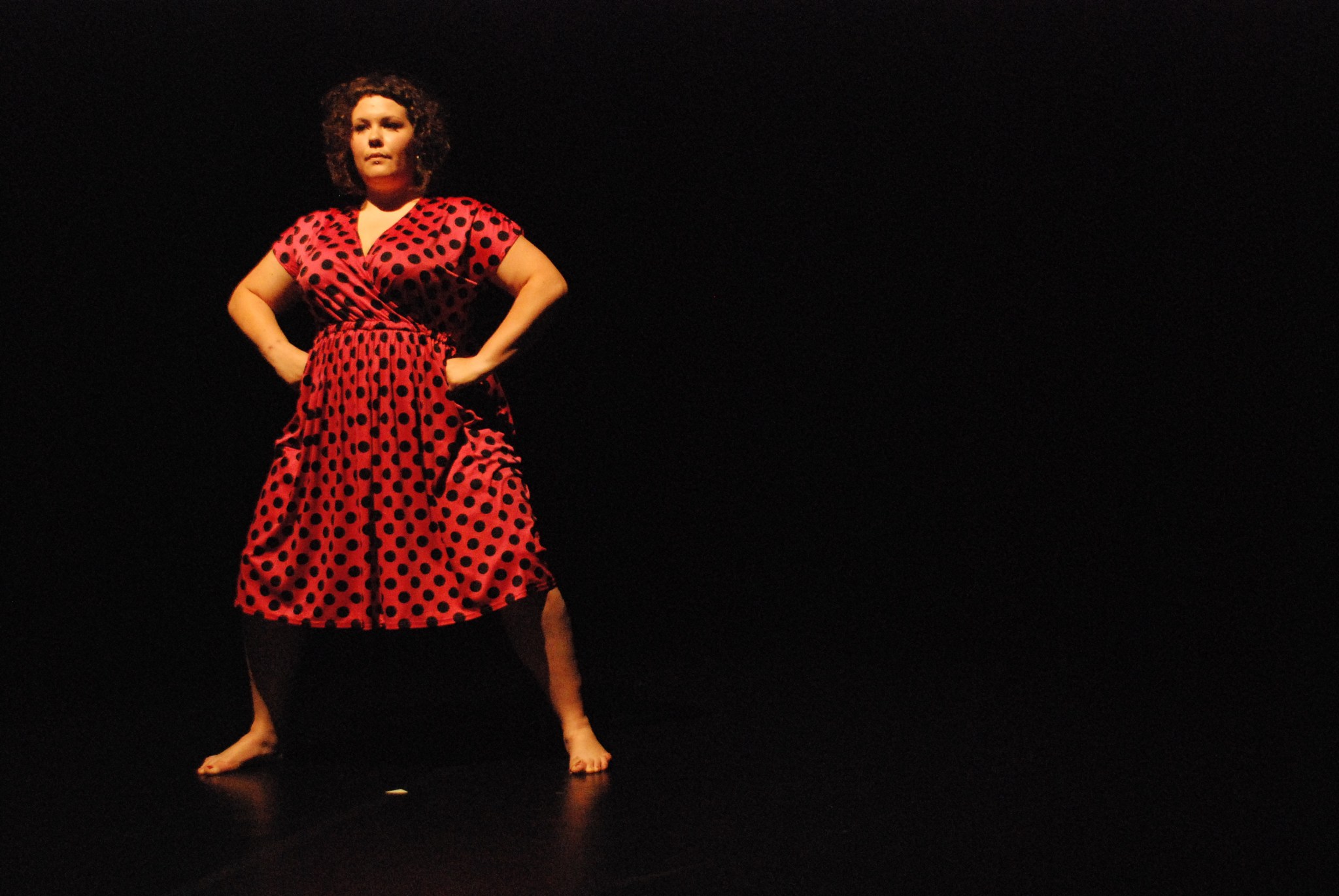
DANCE CLASS: a performance

DANCE CLASS: a performance

DANCE CLASS: a performance wants to be a show (it wants to shine, be in the limelight).

This performance wants to be a class (it wants you to learn, wear comfy clothes).

In the danceclassperformance all the participants do some dancing and do some watching (even at the same time). It is open to all levels of dancers and spectators. Please bear in mind that all should come in comfortable clothing and be prepared to watch and dance without shoes. You won’t sweat too much, honest.

Choreographer/performer Gillie Kleiman
Artistic advisors Simon Bayly, Gill Clarke
Producer Beckie Darlington
Photography Camilla Greenwell
Trailers Eleanor Sikorski
Documentation Katarzyna Perlak

Supported using public funding by the National Lottery through Arts Council England

Trailers

Documentation

https://vimeo.com/148080514

Battersea Arts Centre, London, May 2011

SPILL, Ipswich, October 2012

BUZZCUT, Glasgow, March 2013

Forest Fringe at The Place, London, March 2015
Dance City, Newcastle, October 2015

Attenborough Arts Centre, Leicester, October 2015

Dance4, Nottingham, October-November 2015

Shoreditch Town Hall, London, November 2015

ARC, Stockton Arts Centre, November 2015

Study in Superhero

Study in Superhero


A couple of short solo studies derived from group processes.


A version for soloist Hannah McDermott from youth group Mania, Dance City, Newcastle, July 2010

Homemade Festival at Chisenhale Dance Space, London, November 2010

Chelsea Theatre, London, November 2010

The Public House at Elephant and Castle Shopping Centre, London, May 2011